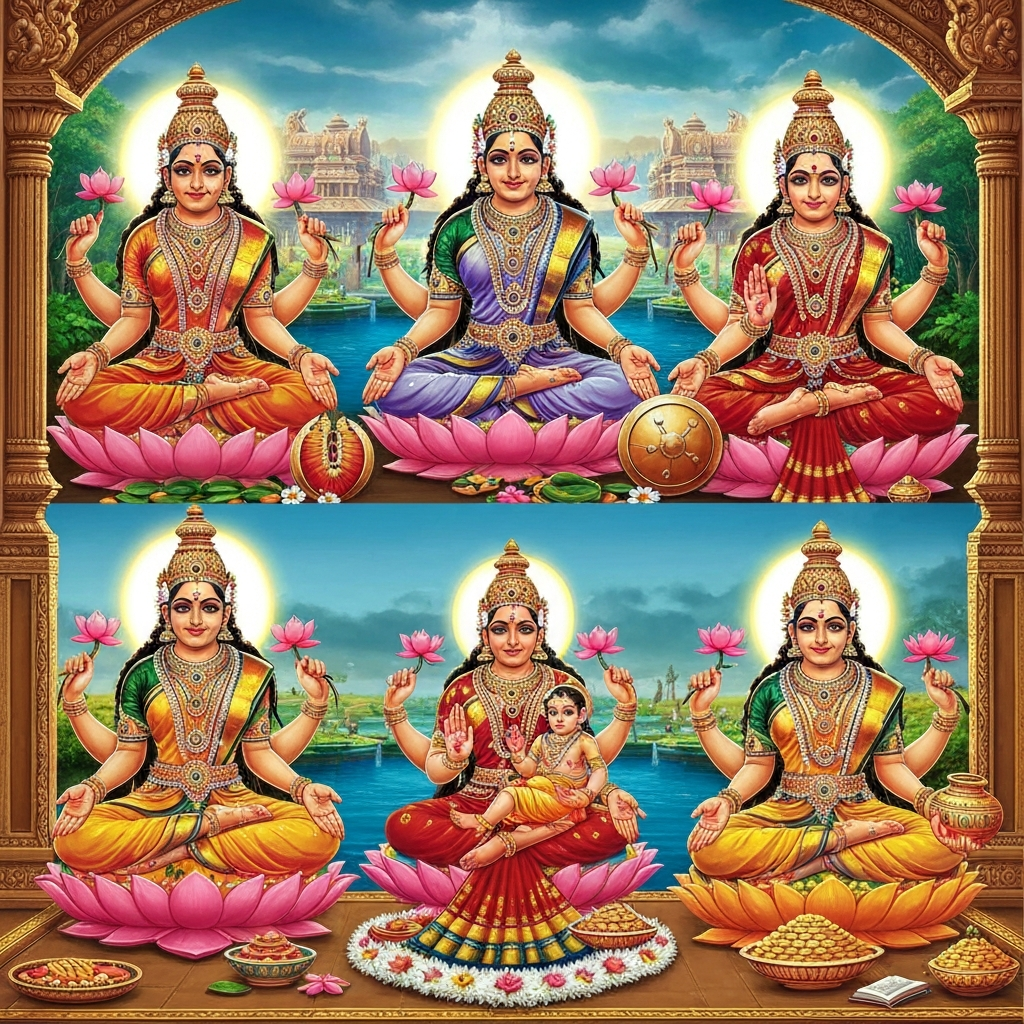
Ganesha Atharvashirsha
गणेश अथर्वशीर्ष|Gaṇeśa Atharvaśīrṣa|The Head-Verse of Atharva Veda for Ganesha
Also known as: Ganapati Atharvashirsha · Ganapati Upanishad

Cover image generated by AI · #Greetingify · #SocialBotStudio
ॐ भद्रं कर्णेभिः शृणुयाम देवाः। भद्रं पश्येमाक्षभिर्यजत्राः। स्थिरैरङ्गैस्तुष्टुवांसस्तनूभिः। व्यशेम देवहितं यदायुः। ॐ शान्तिः शान्तिः शान्तिः॥ ॐ नमस्ते गणपतये। त्वमेव प्रत्यक्षं तत्त्वमसि। त्वमेव केवलं कर्तासि। त्वमेव केवलं धर्तासि। त्वमेव केवलं हर्तासि। त्वमेव सर्वं खल्विदं ब्रह्मासि। त्वं साक्षादात्मासि नित्यम्॥ ऋतं वच्मि। सत्यं वच्मि॥ अव त्वं माम्। अव वक्तारम्। अव श्रोतारम्। अव दातारम्। अव धातारम्। अवानूचानमव शिष्यम्। अव पश्चात्तात्। अव पुरस्तात्। अवोत्तरात्तात्। अव दक्षिणात्तात्। अव चोर्ध्वात्तात्। अवाधरात्तात्। सर्वतो मां पाहि पाहि समन्तात्॥ त्वं वाङ्मयस्त्वं चिन्मयः। त्वमानन्दमयस्त्वं ब्रह्ममयः। त्वं सच्चिदानन्दाद्वितीयोऽसि। त्वं प्रत्यक्षं ब्रह्मासि। त्वं ज्ञानमयो विज्ञानमयोऽसि॥ सर्वं जगदिदं त्वत्तो जायते। सर्वं जगदिदं त्वत्तस्तिष्ठति। सर्वं जगदिदं त्वयि लयमेष्यति। सर्वं जगदिदं त्वयि प्रत्येति। त्वं भूमिरापोऽनलोऽनिलो नभः। त्वं चत्वारि वाक्पदानि॥ त्वं गुणत्रयातीतः। त्वमवस्थात्रयातीतः। त्वं देहत्रयातीतः। त्वं कालत्रयातीतः। त्वं मूलाधारस्थितोऽसि नित्यम्। त्वं शक्तित्रयात्मकः। त्वां योगिनो ध्यायन्ति नित्यम्। त्वं ब्रह्मा त्वं विष्णुस्त्वं रुद्रस्त्वमिन्द्रस्त्वमग्निस्त्वं वायुस्त्वं सूर्यस्त्वं चन्द्रमास्त्वं ब्रह्मभूर्भुवः स्वरोम्॥ गणादिं पूर्वमुच्चार्य वर्णादींस्तदनन्तरम्। अनुस्वारः परतरः। अर्धेन्दुलसितम्। तारेण ऋद्धम्। एतत्तव मनुस्वरूपम्। गकारः पूर्वरूपम्। अकारो मध्यमरूपम्। अनुस्वारश्चान्त्यरूपम्। बिन्दुरुत्तररूपम्। नादः सन्धानम्। संहिता सन्धिः। सैषा गणेशविद्या। गणकऋषिः। निचृद्गायत्री छन्दः। गणपतिर्देवता। ॐ गं गणपतये नमः॥ एकदन्तं चतुर्हस्तं पाशमङ्कुशधारिणम्। रदं च वरदं हस्तैर्बिभ्राणं मूषकध्वजम्। रक्तं लम्बोदरं शूर्पकर्णकं रक्तवाससम्। रक्तगन्धानुलिप्ताङ्गं रक्तपुष्पैः सुपूजितम्। भक्तानुकम्पिनं देवं जगत्कारणमच्युतम्। आविर्भूतं च सृष्ट्यादौ प्रकृतेः पुरुषात्परम्। एवं ध्यायति यो नित्यं स योगी योगिनां वरः॥ नमो व्रातपतये। नमो गणपतये। नमः प्रमथपतये। नमस्तेऽस्तु लम्बोदरायैकदन्ताय विघ्ननाशिने शिवसुताय श्रीवरदमूर्तये नमो नमः॥ एतदथर्वशीर्षं योऽधीते स ब्रह्मभूयाय कल्पते। स सर्वविघ्नैर्न बाध्यते। स सर्वतः सुखमेधते॥ सायमधीयानो दिवसकृतं पापं नाशयति। प्रातरधीयानो रात्रिकृतं पापं नाशयति। सायं प्रातः प्रयुञ्जानो पापोऽपापो भवति। धर्मार्थकाममोक्षं च विन्दति॥ इदमथर्वशीर्षमशिष्याय न देयम्। यदि मोहाद्दास्यति स पापीयान् भवति॥ सहस्रावर्तनाद्यं यं काममधीते तं तमनेन साधयेत्॥ अनेन गणपतिमभिषिञ्चति स वाग्मी भवति। चतुर्थ्यामनश्नन् जपति स विद्यावान् भवति। इत्यथर्वणवाक्यम्। ब्रह्माद्यावरणं विद्यान्न बिभेति कदाचनेति॥ यो दूर्वाङ्कुरैर्यजति स वैश्रवणोपमो भवति। यो लाजैर्यजति स यशोवान् भवति। स मेधावान् भवति। यो मोदकसहस्रेण यजति स वाञ्छितफलमवाप्नोति। स घृतसमिद्भिर्यजति स सर्वं लभते स सर्वं लभते॥ अष्टौ ब्राह्मणान् सम्यग् ग्राहयित्वा सूर्यवर्चस्वी भवति॥ महागणपतेः सन्निधौ जप्त्वा सर्वविघ्नात्प्रमुच्यते। महादोषात्प्रमुच्यते। महापापात्प्रमुच्यते। महाप्रत्यवायात्प्रमुच्यते। स सर्वविद्भवति स सर्वविद्भवति। य एवं वेद॥ ॐ सह नाववतु। सह नौ भुनक्तु। सह वीर्यं करवावहै। तेजस्वि नावधीतमस्तु मा विद्विषावहै। ॐ शान्तिः शान्तिः शान्तिः॥
ॐ भद्रं कर्णेभिः शृणुयाम देवाः। भद्रं पश्येमाक्षभिर्यजत्राः। स्थिरैरङ्गैस्तुष्टुवांसस्तनूभिः। व्यशेम देवहितं यदायुः। ॐ शान्तिः शान्तिः शान्तिः॥ ॐ नमस्ते गणपतये। त्वमेव प्रत्यक्षं तत्त्वमसि। त्वमेव केवलं कर्तासि। त्वमेव केवलं धर्तासि। त्वमेव केवलं हर्तासि। त्वमेव सर्वं खल्विदं ब्रह्मासि। त्वं साक्षादात्मासि नित्यम्॥ ऋतं वच्मि। सत्यं वच्मि॥ अव त्वं माम्। अव वक्तारम्। अव श्रोतारम्। अव दातारम्। अव धातारम्। अवानूचानमव शिष्यम्। अव पश्चात्तात्। अव पुरस्तात्। अवोत्तरात्तात्। अव दक्षिणात्तात्। अव चोर्ध्वात्तात्। अवाधरात्तात्। सर्वतो मां पाहि पाहि समन्तात्॥ त्वं वाङ्मयस्त्वं चिन्मयः। त्वमानन्दमयस्त्वं ब्रह्ममयः। त्वं सच्चिदानन्दाद्वितीयोऽसि। त्वं प्रत्यक्षं ब्रह्मासि। त्वं ज्ञानमयो विज्ञानमयोऽसि॥ सर्वं जगदिदं त्वत्तो जायते। सर्वं जगदिदं त्वत्तस्तिष्ठति। सर्वं जगदिदं त्वयि लयमेष्यति। सर्वं जगदिदं त्वयि प्रत्येति। त्वं भूमिरापोऽनलोऽनिलो नभः। त्वं चत्वारि वाक्पदानि॥ त्वं गुणत्रयातीतः। त्वमवस्थात्रयातीतः। त्वं देहत्रयातीतः। त्वं कालत्रयातीतः। त्वं मूलाधारस्थितोऽसि नित्यम्। त्वं शक्तित्रयात्मकः। त्वां योगिनो ध्यायन्ति नित्यम्। त्वं ब्रह्मा त्वं विष्णुस्त्वं रुद्रस्त्वमिन्द्रस्त्वमग्निस्त्वं वायुस्त्वं सूर्यस्त्वं चन्द्रमास्त्वं ब्रह्मभूर्भुवः स्वरोम्॥ गणादिं पूर्वमुच्चार्य वर्णादींस्तदनन्तरम्। अनुस्वारः परतरः। अर्धेन्दुलसितम्। तारेण ऋद्धम्। एतत्तव मनुस्वरूपम्। गकारः पूर्वरूपम्। अकारो मध्यमरूपम्। अनुस्वारश्चान्त्यरूपम्। बिन्दुरुत्तररूपम्। नादः सन्धानम्। संहिता सन्धिः। सैषा गणेशविद्या। गणकऋषिः। निचृद्गायत्री छन्दः। गणपतिर्देवता। ॐ गं गणपतये नमः॥ एकदन्तं चतुर्हस्तं पाशमङ्कुशधारिणम्। रदं च वरदं हस्तैर्बिभ्राणं मूषकध्वजम्। रक्तं लम्बोदरं शूर्पकर्णकं रक्तवाससम्। रक्तगन्धानुलिप्ताङ्गं रक्तपुष्पैः सुपूजितम्। भक्तानुकम्पिनं देवं जगत्कारणमच्युतम्। आविर्भूतं च सृष्ट्यादौ प्रकृतेः पुरुषात्परम्। एवं ध्यायति यो नित्यं स योगी योगिनां वरः॥ नमो व्रातपतये। नमो गणपतये। नमः प्रमथपतये। नमस्तेऽस्तु लम्बोदरायैकदन्ताय विघ्ननाशिने शिवसुताय श्रीवरदमूर्तये नमो नमः॥ एतदथर्वशीर्षं योऽधीते स ब्रह्मभूयाय कल्पते। स सर्वविघ्नैर्न बाध्यते। स सर्वतः सुखमेधते॥ सायमधीयानो दिवसकृतं पापं नाशयति। प्रातरधीयानो रात्रिकृतं पापं नाशयति। सायं प्रातः प्रयुञ्जानो पापोऽपापो भवति। धर्मार्थकाममोक्षं च विन्दति॥ इदमथर्वशीर्षमशिष्याय न देयम्। यदि मोहाद्दास्यति स पापीयान् भवति॥ सहस्रावर्तनाद्यं यं काममधीते तं तमनेन साधयेत्॥ अनेन गणपतिमभिषिञ्चति स वाग्मी भवति। चतुर्थ्यामनश्नन् जपति स विद्यावान् भवति। इत्यथर्वणवाक्यम्। ब्रह्माद्यावरणं विद्यान्न बिभेति कदाचनेति॥ यो दूर्वाङ्कुरैर्यजति स वैश्रवणोपमो भवति। यो लाजैर्यजति स यशोवान् भवति। स मेधावान् भवति। यो मोदकसहस्रेण यजति स वाञ्छितफलमवाप्नोति। स घृतसमिद्भिर्यजति स सर्वं लभते स सर्वं लभते॥ अष्टौ ब्राह्मणान् सम्यग् ग्राहयित्वा सूर्यवर्चस्वी भवति॥ महागणपतेः सन्निधौ जप्त्वा सर्वविघ्नात्प्रमुच्यते। महादोषात्प्रमुच्यते। महापापात्प्रमुच्यते। महाप्रत्यवायात्प्रमुच्यते। स सर्वविद्भवति स सर्वविद्भवति। य एवं वेद॥ ॐ सह नाववतु। सह नौ भुनक्तु। सह वीर्यं करवावहै। तेजस्वि नावधीतमस्तु मा विद्विषावहै। ॐ शान्तिः शान्तिः शान्तिः॥
Om. O Devas, may we hear auspicious words with our ears. May we, who are worthy of worship, see auspicious things with our eyes. May we live the full span of life allotted by the Devas, praising them with steady limbs and bodies. Om Peace, Peace, Peace. Om. Salutations to You, O Ganapati. You are indeed the manifest principle (Tattva). You alone are the creator. You alone are the sustainer. You alone are the destroyer. You are verily all this Brahman. You are the eternal, manifest Self. I speak the truth. I speak the reality. Protect me. Protect the speaker. Protect the listener. Protect the giver. Protect the supporter. Protect the teacher. Protect the student. Protect from the West. Protect from the East. Protect from the North. Protect from the South. Protect from above. Protect from below. Protect me from all sides, protect me completely. You are speech, You are consciousness. You are bliss, You are Brahman. You are the non-dual existence-consciousness-bliss. You are the manifest Brahman. You are full of knowledge and wisdom. All this universe originates from You. All this universe is sustained by You. All this universe dissolves into You. All this universe returns to You. You are the earth, water, fire, air, and ether. You are the four parts of speech. You are beyond the three Gunas (Sattva, Rajas, Tamas). You are beyond the three states (waking, dreaming, deep sleep). You are beyond the three bodies (gross, subtle, causal). You are beyond the three divisions of time (past, present, future). You are eternally situated in the Muladhara chakra. You are the essence of the three powers (Ichha, Jnana, Kriya). Yogis meditate on You eternally. You are Brahma, You are Vishnu, You are Rudra, You are Indra, You are Agni, You are Vayu, You are Surya, You are Chandrama. You are the three worlds (Bhur, Bhuvah, Svah) and Om. First uttering 'Ga' (Gana), then the initial letter 'A' (from A-kara), then the Anusvara (bindu) which is supreme, adorned with the crescent moon, enriched by the 'Om' (tara). This is your mantra form. 'Ga' is the initial form. 'A' is the middle form. The Anusvara is the final form. The bindu is the supreme form. Nada is the conjunction. Samhita is the union. This is the Ganesha Vidya. Ganaka is the Rishi. Nichrut Gayatri is the meter. Ganapati is the deity. Om Gam Ganapataye Namah. (We meditate on Ganesha) who has one tusk, four arms, holding a noose and an elephant goad, a broken tusk and granting boons with his hands, with a mouse as his emblem. Who is red, has a large belly, winnowing-basket-like ears, wears red garments, is smeared with red fragrance, and worshipped with red flowers. Who is compassionate to devotees, the immutable cause of the universe, manifested at the beginning of creation, beyond Prakriti and Purusha. One who meditates on Him thus daily, is the best among yogis. Salutations to the Lord of Hosts. Salutations to Ganapati. Salutations to the Lord of Pramathas. Salutations to You, O large-bellied one, one-tusked one, destroyer of obstacles, son of Shiva, the auspicious giver of boons. Salutations again and again. One who studies this Atharvashirsha becomes fit for Brahman-realization. He is not hindered by any obstacles. He prospers in all ways. One who studies it in the evening destroys the sins committed during the day. One who studies it in the morning destroys the sins committed during the night. One who studies it both morning and evening becomes free from sin. He attains Dharma, Artha, Kama, and Moksha. This Atharvashirsha should not be given to an unworthy student. If one gives it out of delusion, he becomes a sinner. By reciting it a thousand times, one achieves whatever desires one has. One who performs ablution (abhisheka) of Ganapati with this (mantra) becomes eloquent. One who fasts on Chaturthi and chants this becomes learned. This is the statement of Atharvan. Knowing the covering of Brahma and others, one never fears. One who worships with Durva grass becomes like Kubera (the god of wealth). One who worships with parched rice (laja) becomes famous. He becomes intelligent. One who worships with a thousand modakas attains desired fruits. One who worships with ghee oblations attains everything, attains everything. By properly teaching it to eight Brahmins, one becomes radiant like the sun. By chanting it in the presence of Mahaganapati, one is freed from all obstacles. One is freed from great faults. One is freed from great sins. One is freed from great impediments. He becomes omniscient, he becomes omniscient, who knows this thus. Om. May He protect us both (teacher and student). May He nourish us both. May we work together with great energy. May our study be brilliant. May we not hate each other. Om Peace, Peace, Peace.
The translation aims for accuracy while preserving the spiritual depth and philosophical nuances of the original Sanskrit. Special attention is paid to key Vedic and Upanishadic terms.
The Ganesha Atharvashirsha is a significant Sanskrit text dedicated to Lord Ganesha, revered as the remover of obstacles and the lord of beginnings. It is classified as a minor Upanishad and is associated with the Atharva Veda, though its exact period of composition is debated, generally placed between the 16th and 17th centuries CE, making it a relatively later Upanishad. It emerged during a period when various Puranic deities were being elevated to the status of Brahman, the ultimate reality, reflecting the syncretic nature of Hindu traditions. The text is particularly important to the Ganapatya tradition, a sect within Hinduism that worships Ganesha as the supreme deity. Culturally, the Ganesha Atharvashirsha holds immense significance, particularly in Maharashtra and other parts of India where Ganesha worship is prominent. It is recited daily by many devotees, especially before commencing any new venture, ritual, or study, to invoke Ganesha's blessings for success and obstacle removal. It is a central prayer during major Ganesha festivals like Ganesh Chaturthi, where it is chanted in homes and temples. Its recitation is believed to purify the mind, grant wisdom, and fulfill desires, making it a powerful spiritual tool for personal and communal well-being. The Atharvashirsha is typically chanted by individuals or groups, often in a melodic, rhythmic style characteristic of Vedic recitation. While no specific instruments are traditionally associated with its recitation, it is often part of a larger puja (worship ritual) where bells, lamps, and offerings are used. It is primarily a devotional and meditative text, not typically associated with dance. Brahmins and priests often lead its recitation in temples, but it is also widely learned and recited by lay devotees. The emphasis is on clear pronunciation and understanding of the Sanskrit. Today, the Ganesha Atharvashirsha remains a cornerstone of Ganesha devotion. Its philosophical depth, equating Ganesha with the ultimate Brahman, continues to inspire spiritual seekers. It is widely available in printed form, online, and through audio recordings, ensuring its preservation and accessibility. Its continued recitation underscores the enduring relevance of ancient Vedic wisdom in contemporary spiritual practices, serving as a bridge between ancient traditions and modern devotional life. Its preservation is crucial for maintaining the rich tapestry of Hindu spiritual literature.
Historical Background
A minor Upanishad associated with the Atharva Veda, likely composed between the 16th and 17th centuries CE. It reflects the rise of sectarian devotion where specific deities like Ganesha were identified with the ultimate Brahman. It is a foundational text for the Ganapatya tradition.
Cultural Significance
A cornerstone of Ganesha worship, particularly in Maharashtra. It provides a philosophical basis for Ganesha's supreme status and is believed to grant wisdom, success, and remove obstacles. Its recitation is a vital part of Hindu spiritual practice and cultural identity.
Usage & Performance Context
Recited daily by devotees, especially before starting new ventures, studies, or rituals. Chanted during Ganesh Chaturthi and other Ganesha-related festivals. Used in temple worship and personal puja.
गणेश अथर्वशीर्ष भगवान गणेश को समर्पित एक महत्वपूर्ण संस्कृत ग्रंथ है, जिन्हें विघ्नहर्ता और शुभ कार्यों के अधिपति के रूप में पूजा जाता है। इसे एक गौण उपनिषद के रूप में वर्गीकृत किया गया है और यह अथर्ववेद से जुड़ा है, हालांकि इसकी रचना की सटीक अवधि पर बहस होती है, आमतौर पर इसे 16वीं और 17वीं शताब्दी ईस्वी के बीच रखा जाता है, जिससे यह अपेक्षाकृत बाद का उपनिषद बन जाता है। यह उस अवधि के दौरान उभरा जब विभिन्न पौराणिक देवताओं को ब्रह्म, परम वास्तविकता का दर्जा दिया जा रहा था, जो हिंदू परंपराओं के समन्वयवादी स्वरूप को दर्शाता है। यह पाठ विशेष रूप से गणपति संप्रदाय के लिए महत्वपूर्ण है, जो हिंदू धर्म के भीतर एक ऐसा संप्रदाय है जो गणेश को सर्वोच्च देवता के रूप में पूजता है। सांस्कृतिक रूप से, गणेश अथर्वशीर्ष का अत्यधिक महत्व है, विशेष रूप से महाराष्ट्र और भारत के अन्य हिस्सों में जहां गणेश पूजा प्रमुख है। इसे कई भक्त प्रतिदिन पढ़ते हैं, खासकर किसी भी नए उद्यम, अनुष्ठान या अध्ययन को शुरू करने से पहले, सफलता और बाधाओं को दूर करने के लिए गणेश का आशीर्वाद प्राप्त करने के लिए। यह गणेश चतुर्थी जैसे प्रमुख गणेश त्योहारों के दौरान एक केंद्रीय प्रार्थना है, जहां इसे घरों और मंदिरों में पढ़ा जाता है। इसका पाठ मन को शुद्ध करने, ज्ञान प्रदान करने और इच्छाओं को पूरा करने वाला माना जाता है, जिससे यह व्यक्तिगत और सामुदायिक कल्याण के लिए एक शक्तिशाली आध्यात्मिक उपकरण बन जाता है। अथर्वशीर्ष का पाठ आमतौर पर व्यक्तियों या समूहों द्वारा किया जाता है, अक्सर वैदिक पाठ की विशिष्ट मधुर, लयबद्ध शैली में। जबकि इसके पाठ के साथ कोई विशिष्ट वाद्य यंत्र पारंपरिक रूप से जुड़े नहीं हैं, यह अक्सर एक बड़ी पूजा का हिस्सा होता है जहां घंटियों, दीपों और चढ़ावों का उपयोग किया जाता है। यह मुख्य रूप से एक भक्ति और ध्यानपूर्ण पाठ है, जो आमतौर पर नृत्य से जुड़ा नहीं है। ब्राह्मण और पुजारी अक्सर मंदिरों में इसके पाठ का नेतृत्व करते हैं, लेकिन इसे आम भक्तों द्वारा भी व्यापक रूप से सीखा और पढ़ा जाता है। संस्कृत के स्पष्ट उच्चारण और समझ पर जोर दिया जाता है। आज भी, गणेश अथर्वशीर्ष गणेश भक्ति का एक आधारशिला बना हुआ है। इसकी दार्शनिक गहराई, जो गणेश को परम ब्रह्म के साथ जोड़ती है, आध्यात्मिक साधकों को प्रेरित करती रहती है। यह मुद्रित रूप में, ऑनलाइन और ऑडियो रिकॉर्डिंग के माध्यम से व्यापक रूप से उपलब्ध है, जिससे इसका संरक्षण और पहुंच सुनिश्चित होती है। इसका निरंतर पाठ समकालीन आध्यात्मिक प्रथाओं में प्राचीन वैदिक ज्ञान की स्थायी प्रासंगिकता को रेखांकित करता है, जो प्राचीन परंपराओं और आधुनिक भक्तिमय जीवन के बीच एक सेतु का काम करता है। हिंदू आध्यात्मिक साहित्य की समृद्ध विरासत को बनाए रखने के लिए इसका संरक्षण महत्वपूर्ण है।
What is the Ganesha Atharvashirsha?
The Ganesha Atharvashirsha is an ancient Sanskrit hymn and a minor Upanishad dedicated to Lord Ganesha. It extols Ganesha as the supreme reality (Brahman) and the source of all creation, sustenance, and dissolution. It is widely recited by devotees for blessings, wisdom, and the removal of obstacles.
What are the benefits of chanting Ganesha Atharvashirsha?
Chanting the Ganesha Atharvashirsha is believed to confer numerous benefits, including the removal of obstacles (vighnas), attainment of wisdom and knowledge, fulfillment of desires (dharma, artha, kama, moksha), purification from sins, and overall prosperity and well-being. It is also said to lead to Brahman-realization.
When is Ganesha Atharvashirsha typically recited?
Devotees typically recite the Ganesha Atharvashirsha daily, especially in the morning or evening. It is considered highly auspicious to chant it before commencing any new venture, study, or ritual. It is also a central prayer during Ganesha festivals, particularly Ganesh Chaturthi.
Is Ganesha Atharvashirsha part of the Vedas?
The Ganesha Atharvashirsha is considered a minor Upanishad and is traditionally associated with the Atharva Veda. While it is a later addition to the Upanishadic corpus (likely 16th-17th century CE), it draws upon Vedic philosophical concepts and is revered as a sacred scripture within the Hindu tradition.
What is the significance of Ganesha in this text?
In the Ganesha Atharvashirsha, Ganesha is elevated to the status of the ultimate reality, Brahman. He is identified as the creator, preserver, and destroyer of the universe, embodying all deities and cosmic principles. The text presents Ganesha not just as a deity but as the manifest form of the non-dual existence-consciousness-bliss (Satchidananda).
Region
Maharashtra, India
Language
Sanskrit (Devanagari)
Themes
Contributor
Anonymous
Based on 0 ratings.