
She'll Be Comin' 'Round the Mountain
She'll Be Comin' 'Round the Mountain|She'll Be Comin' 'Round the Mountain
Also known as: Coming 'Round the Mountain · When She Comes 'Round the Mountain
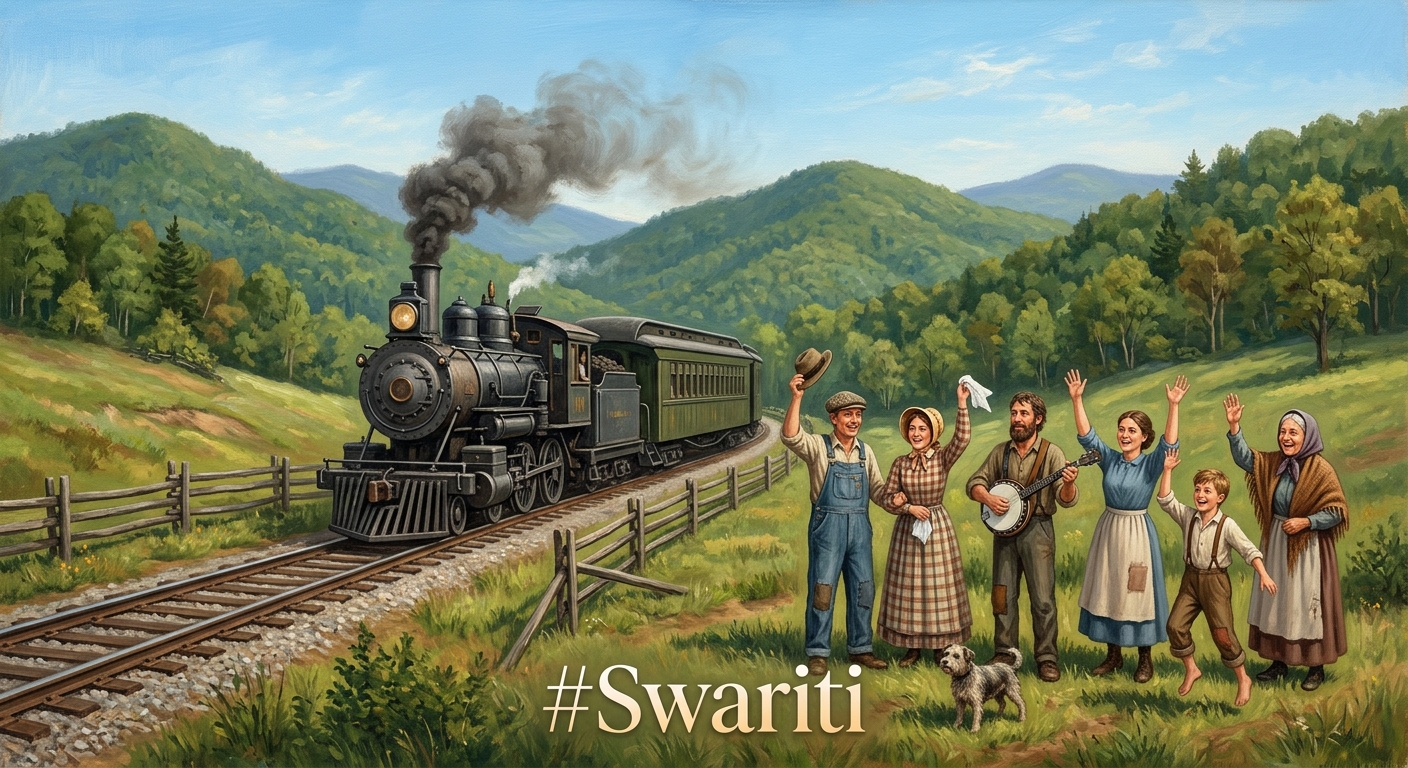
Cover image generated by AI · #Greetingify · #SocialBotStudio
She'll be comin' 'round the mountain when she comes, She'll be comin' 'round the mountain when she comes, She'll be comin' 'round the mountain, she'll be comin' 'round the mountain, She'll be comin' 'round the mountain when she comes. Oh, we'll all go out to meet her when she comes, Oh, we'll all go out to meet her when she comes, Oh, we'll all go out to meet her, we'll all go out to meet her, Oh, we'll all go out to meet her when she comes. She'll be drivin' six white horses when she comes, She'll be drivin' six white horses when she comes, She'll be drivin' six white horses, she'll be drivin' six white horses, She'll be drivin' six white horses when she comes. Oh, we'll all shout "Hallelujah!" when she comes, Oh, we'll all shout "Hallelujah!" when she comes, Oh, we'll all shout "Hallelujah!", we'll all shout "Hallelujah!", Oh, we'll all shout "Hallelujah!" when she comes. She'll be wearin' red pajamas when she comes, She'll be wearin' red pajamas when she comes, She'll be wearin' red pajamas, she'll be wearin' red pajamas, She'll be wearin' red pajamas when she comes. She'll be eatin' chicken and dumplings when she comes, She'll be eatin' chicken and dumplings when she comes, She'll be eatin' chicken and dumplings, she'll be eatin' chicken and dumplings, She'll be eatin' chicken and dumplings when she comes. Oh, we'll all have a party when she comes, Oh, we'll all have a party when she comes, Oh, we'll all have a party, we'll all have a party, Oh, we'll all have a party when she comes.
She'll be comin' 'round the mountain when she comes, She'll be comin' 'round the mountain when she comes, She'll be comin' 'round the mountain, she'll be comin' 'round the mountain, She'll be comin' 'round the mountain when she comes. Oh, we'll all go out to meet her when she comes, Oh, we'll all go out to meet her when she comes, Oh, we'll all go out to meet her, we'll all go out to meet her, Oh, we'll all go out to meet her when she comes. She'll be drivin' six white horses when she comes, She'll be drivin' six white horses when she comes, She'll be drivin' six white horses, she'll be drivin' six white horses, She'll be drivin' six white horses when she comes. Oh, we'll all shout "Hallelujah!" when she comes, Oh, we'll all shout "Hallelujah!" when she comes, Oh, we'll all shout "Hallelujah!", we'll all shout "Hallelujah!", Oh, we'll all shout "Hallelujah!" when she comes. She'll be wearin' red pajamas when she comes, She'll be wearin' red pajamas when she comes, She'll be wearin' red pajamas, she'll be wearin' red pajamas, She'll be wearin' red pajamas when she comes. She'll be eatin' chicken and dumplings when she comes, She'll be eatin' chicken and dumplings when she comes, She'll be eatin' chicken and dumplings, she'll be eatin' chicken and dumplings, She'll be eatin' chicken and dumplings when she comes. Oh, we'll all have a party when she comes, Oh, we'll all have a party when she comes, Oh, we'll all have a party, we'll all have a party, Oh, we'll all have a party when she comes.
As the original lyrics are in English, the 'translation' provided is identical to the original text, preserving the common stanza structure.
The folk song "She'll Be Comin' 'Round the Mountain" is a quintessential piece of American musical heritage, deeply rooted in the country's oral traditions. Its origins are somewhat debated, but it is widely believed to have evolved from an old African-American spiritual titled "When the Chariot Comes," which itself might have been a work song. The spiritual spoke of the Second Coming of Christ, with the 'chariot' being a metaphor for divine arrival. Over time, particularly in the late 19th and early 20th centuries, the lyrics and melody were secularized and adapted, likely by railroad workers in the Appalachian region, transforming the spiritual imagery into a more earthly anticipation of a train or a person. The earliest known published version dates to 1927, collected by Carl Sandburg, but it was certainly sung much earlier. Culturally, the song embodies themes of anticipation, community gathering, and simple joys. It's often associated with the arrival of a beloved figure or an exciting event, fostering a sense of collective excitement. While not tied to specific rituals or festivals, its communal nature makes it a popular choice for gatherings, campfires, and children's sing-alongs. The repetitive structure and call-and-response potential make it highly engaging for group participation, reinforcing bonds and shared experiences. Its adaptability, allowing for new verses to be easily added, speaks to its organic folk roots and its ability to reflect the immediate context of its singers. Performance of "She'll Be Comin' 'Round the Mountain" is typically informal and participatory. It's often sung a cappella or accompanied by simple folk instruments like a guitar, banjo, fiddle, or harmonica. The performance style is almost always a call-and-response, with a leader singing the main line and the group responding with the repeated phrase, often with increasing enthusiasm and actions. This makes it particularly effective for children's groups, where actions can be mimed for each verse (e.g., 'driving six white horses,' 'shouting Hallelujah'). Its simple melody and rhythm make it accessible to singers of all ages and musical abilities. Today, "She'll Be Comin' 'Round the Mountain" remains a beloved and widely recognized folk song, a testament to its enduring appeal and cultural resonance. It serves as a gateway for many to the rich tradition of American folk music, often being one of the first songs children learn. Its preservation is crucial for understanding the evolution of American popular music and the interplay between spirituals, work songs, and secular folk tunes. Modern adaptations often see it used in educational settings, children's entertainment, and even as a source of inspiration for contemporary artists who appreciate its simple charm and communal spirit. It stands as a vibrant example of how oral traditions can adapt, survive, and thrive across generations.
Historical Background
Evolved from an African-American spiritual, "When the Chariot Comes," in the late 19th century. It was secularized and popularized, particularly among railroad workers in the American South and Appalachia, becoming a widespread folk song by the early 20th century. First published in a collection in 1927.
Cultural Significance
A foundational piece of American folk music, representing the adaptation of spirituals into secular folk tunes. It fosters community, teaches group singing, and is a widely recognized symbol of American cultural heritage, especially in children's music and educational contexts.
Usage & Performance Context
Primarily sung in informal settings, such as campfires, school assemblies, children's parties, family gatherings, and community sing-alongs. It is a popular choice for teaching children about folk music and group singing due to its simple, repetitive structure and interactive nature.
What is the origin of 'She'll Be Comin' 'Round the Mountain'?
The song is believed to have originated from an African-American spiritual titled 'When the Chariot Comes' in the late 19th century. It was later secularized and adapted, possibly by railroad workers in the American South and Appalachia, transforming its spiritual imagery into a more earthly anticipation.
Is 'She'll Be Comin' 'Round the Mountain' in the public domain?
Yes, 'She'll Be Comin' 'Round the Mountain' is widely considered to be in the public domain. It is a traditional folk song with no single identifiable author or composer, having been in common circulation for over a century.
What are the common themes of the song?
The song's primary themes include anticipation, community gathering, joy, and celebration. It evokes a sense of collective excitement for an upcoming event or the arrival of a beloved figure, often associated with simple, rustic pleasures.
How is 'She'll Be Comin' 'Round the Mountain' typically performed?
It is usually performed informally, often a cappella or with simple folk instruments like guitar or banjo. Its structure lends itself well to call-and-response, with a leader singing a line and a group responding, making it popular for sing-alongs and children's activities.
Why is this song important for American cultural heritage?
It's important as a foundational piece of American folk music, illustrating the adaptation of spirituals into secular tunes. It fosters community, teaches group singing, and remains a widely recognized symbol of American cultural heritage, especially in educational and children's music contexts.
Region
Appalachian Region, United States
Language
English (Latin)
Themes
Contributor
Anonymous
Based on 0 ratings.


