Oh! Susanna
Oh! Susanna|Oh! Susanna
Also known as: Oh Susanna · O Susanna · Banjo on My Knee

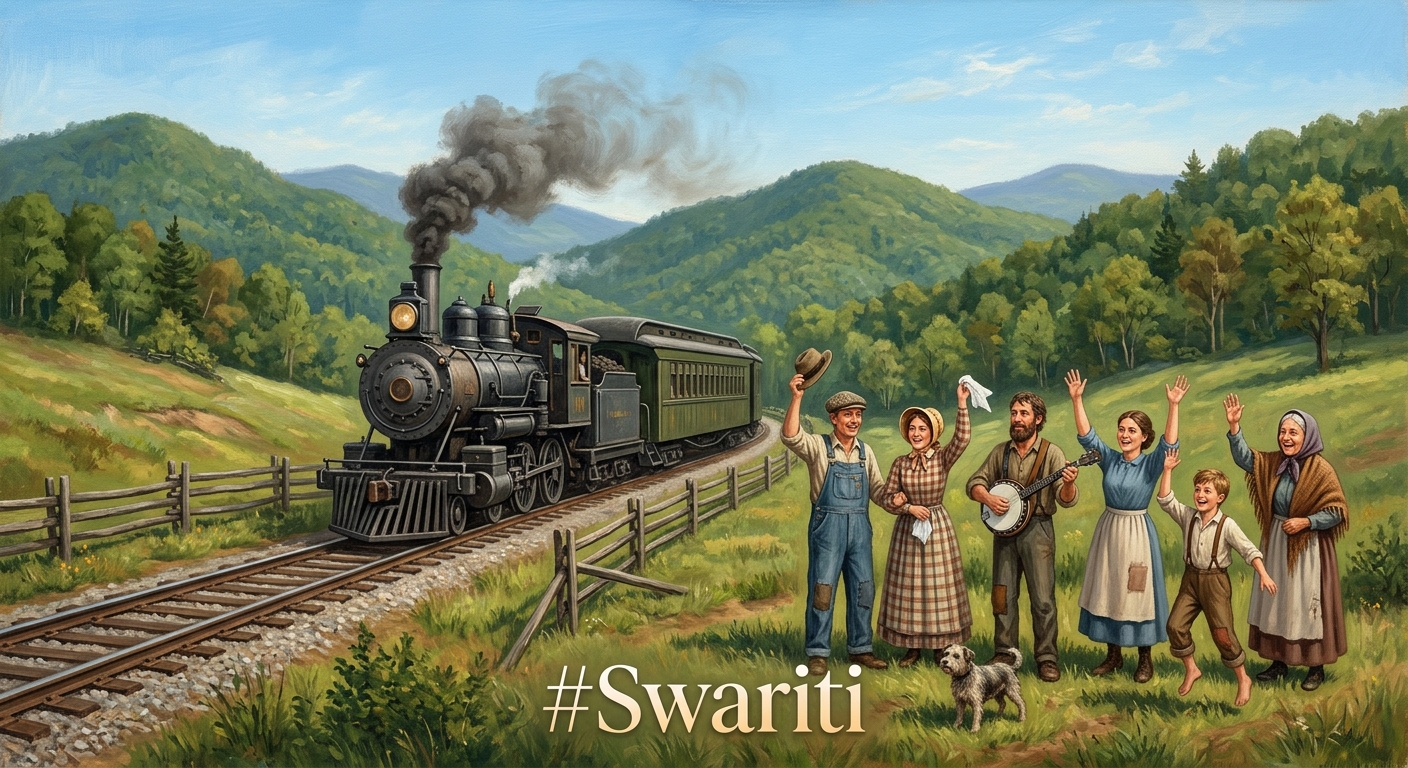
Cover image generated by AI · #Greetingify · #SocialBotStudio
I came from Alabama with my banjo on my knee, I'm goin' to Louisiana, my true love for to see. It rained all night the day I left, the weather it was dry, The sun so hot I froze to death; Susanna, don't you cry. [Chorus] Oh, Susanna, oh, don't you cry for me! I come from Alabama, with my banjo on my knee. I had a dream the other night, when everything was still; I thought I saw Susanna, a-coming down the hill. The buckwheat cake was in her mouth, the tear was in her eye, Says I, "I'm coming from the South, Susanna, don't you cry." [Chorus] Oh, Susanna, oh, don't you cry for me! I come from Alabama, with my banjo on my knee. I soon shall be in New Orleans, and then I'll look around, And when I find Susanna, I'll fall upon the ground. But if I do not find her, then I'll surely die, And when I'm dead and buried, Susanna, don't you cry. [Chorus] Oh, Susanna, oh, don't you cry for me! I come from Alabama, with my banjo on my knee. I jumped aboard the telegraph, and traveled down the river, The 'lectric fluid magnified, and killed five hundred n*ggers. The boat she tipped upon her side, and threw them in the stream, And when I woke, it was a dream, Susanna, don't you cry. [Chorus] Oh, Susanna, oh, don't you cry for me! I come from Alabama, with my banjo on my knee.
I came from Alabama with my banjo on my knee, I'm going to Louisiana, my true love for to see. It rained all night the day I left, the weather it was dry, The sun so hot I froze to death; Susanna, don't you cry. [Chorus] Oh, Susanna, oh, don't you cry for me! I come from Alabama, with my banjo on my knee. I had a dream the other night, when everything was still; I thought I saw Susanna, a-coming down the hill. The buckwheat cake was in her mouth, the tear was in her eye, Says I, "I'm coming from the South, Susanna, don't you cry." [Chorus] Oh, Susanna, oh, don't you cry for me! I come from Alabama, with my banjo on my knee. I soon shall be in New Orleans, and then I'll look around, And when I find Susanna, I'll fall upon the ground. But if I do not find her, then I'll surely die, And when I'm dead and buried, Susanna, don't you cry. [Chorus] Oh, Susanna, oh, don't you cry for me! I come from Alabama, with my banjo on my knee. I jumped aboard the telegraph, and traveled down the river, The electric fluid magnified, and killed five hundred n*ggers. The boat she tipped upon her side, and threw them in the stream, And when I woke, it was a dream, Susanna, don't you cry. [Chorus] Oh, Susanna, oh, don't you cry for me! I come from Alabama, with my banjo on my knee.
The translation is a direct, literal rendering of the original English lyrics, preserving the informal and colloquial tone. No significant linguistic difficulties or cultural nuances required extensive interpretation.
Oh! Susanna is one of the most enduring and recognizable American folk songs, composed by Stephen Foster in 1848. Foster, often considered the 'father of American music,' wrote the song for minstrel shows, a popular form of entertainment in the 19th century that often featured white performers in blackface. The song's immediate popularity was immense, becoming an unofficial anthem for the California Gold Rush, as prospectors heading west adopted it as a travel song. Its simple, catchy melody and narrative of a journey from Alabama to Louisiana in search of a loved one resonated deeply with a transient population. Culturally, 'Oh! Susanna' holds a complex position. While beloved for its melody and association with a foundational period of American expansion, its origins in minstrelsy and the presence of a racial slur in one of its original verses (the fourth verse) are deeply problematic. Minstrel shows, which were crude and featured racial jokes and stereotyped antics, used exaggerated dialect to portray African Americans. Despite this, its pervasive presence in American culture, from schoolyards to professional performances, underscores its historical significance. It is often performed in informal settings, at gatherings, and as a staple in folk music concerts, though almost always with the controversial verse omitted or altered. Performance of 'Oh! Susanna' typically involves a solo vocalist or a group singing in unison, often accompanied by a banjo, guitar, or piano. Its structure is simple, consisting of verses alternating with a memorable chorus, making it easy for communal singing. The banjo, a quintessential instrument of American folk and country music with African roots, is explicitly mentioned in the lyrics and is central to the song's traditional sound. The song's narrative style, telling a story of travel and longing, is characteristic of many folk ballads. Today, 'Oh! Susanna' remains a touchstone of American musical heritage, albeit one that requires careful contextualization. Its continued presence in public consciousness highlights the need for critical engagement with historical works that contain offensive elements. Preservation efforts focus on documenting its original form while educating audiences about its problematic aspects and the evolution of its performance. It serves as a powerful reminder of the intertwined and often uncomfortable history of American popular culture, race, and music, prompting discussions about how to honor heritage responsibly.
Historical Background
Composed by Stephen Foster in 1848, a period of rapid American expansion and the peak of minstrel show popularity. It became an anthem for prospectors during the California Gold Rush (1848-1855).
Cultural Significance
One of the most famous American folk songs, deeply embedded in the nation's cultural fabric. It represents a foundational era of American music and westward expansion, though its minstrel origins and problematic lyrics require critical historical understanding. It has influenced countless musicians and remains a symbol of American folk tradition.
Usage & Performance Context
Historically performed in minstrel shows; widely adopted as a travel song during the California Gold Rush; sung informally at gatherings, educational settings, and folk music concerts. Often adapted for children's choirs.
Who wrote 'Oh! Susanna' and when?
'Oh! Susanna' was written by the American composer Stephen Foster in 1848. It was one of his earliest and most popular compositions, quickly becoming a staple in minstrel shows.
What is the historical significance of 'Oh! Susanna'?
The song became incredibly popular during the California Gold Rush, serving as an anthem for prospectors traveling west. It's a foundational piece of American folk music, reflecting the era's themes of travel, longing, and westward expansion, despite its problematic origins in minstrelsy.
Are the lyrics of 'Oh! Susanna' controversial?
Yes, the original fourth verse of 'Oh! Susanna' contains a racial slur. While the song is widely known and sung, this particular verse is almost always omitted or altered in modern performances and publications due to its offensive nature.
Is 'Oh! Susanna' in the public domain?
Yes, 'Oh! Susanna' is firmly in the public domain. Stephen Foster composed it in 1848, meaning its copyright expired many decades ago, making it freely available for use, performance, and adaptation.
What instruments are typically used to perform 'Oh! Susanna'?
Traditionally, 'Oh! Susanna' is often performed with a banjo, as mentioned in the lyrics, along with guitars, pianos, and other common folk instruments. Its simple melody also makes it suitable for a cappella group singing.
Region
Pennsylvania, United States
Language
English (Latin)
Themes
Contributor
Anonymous
Based on 0 ratings.