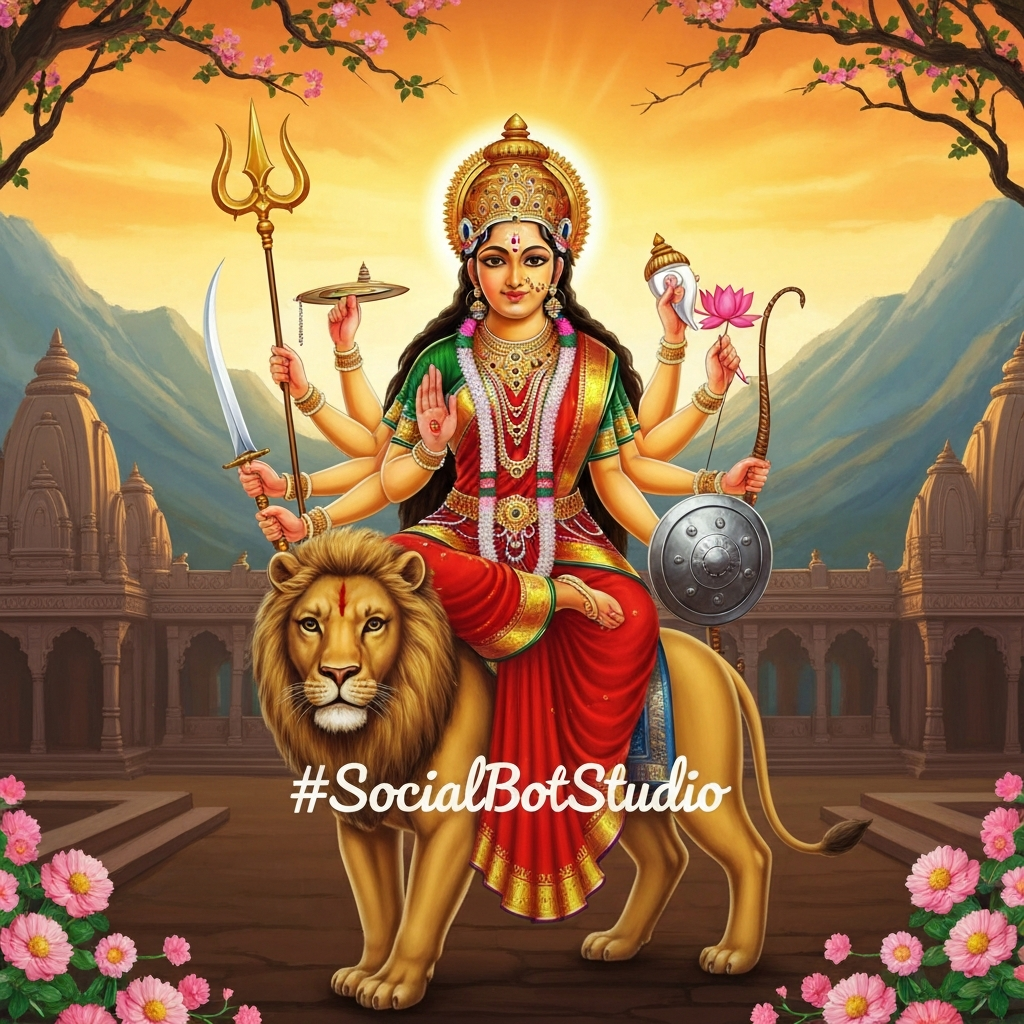
Bhor Bhai Din Chad Gaya Meri Ambe
भोर भई दिन चढ़ गया मेरी अम्बे|Bhor Bhai Din Chad Gaya Meri Ambe|Morning Has Dawned, Day Has Risen, My Mother Ambe
Also known as: Bhor Bhai Din Chadh Gaya · Ambe Maa Aarti · Durga Aarti

Cover image generated by AI · #Greetingify · #SocialBotStudio
भोर भई दिन चढ़ गया मेरी अम्बे हो रही जय जय कार, मंदिर विच आरती जय माँ। भोर भई दिन चढ़ गया मेरी अम्बे हो रही जय जय कार, मंदिर विच आरती जय माँ। तेरे मंदिरां विच घंटी बाजे तेरे मंदिरां विच घंटी बाजे ओ माँ, जय जय कार, मंदिर विच आरती जय माँ। भोर भई दिन चढ़ गया मेरी अम्बे हो रही जय जय कार, मंदिर विच आरती जय माँ। तेरे भक्तन ने जोत जगाई तेरे भक्तन ने जोत जगाई ओ माँ, जय जय कार, मंदिर विच आरती जय माँ। भोर भई दिन चढ़ गया मेरी अम्बे हो रही जय जय कार, मंदिर विच आरती जय माँ। तेरे भक्तन ने फल मिठाई चढ़ाई तेरे भक्तन ने फल मिठाई चढ़ाई ओ माँ, जय जय कार, मंदिर विच आरती जय माँ। भोर भई दिन चढ़ गया मेरी अम्बे हो रही जय जय कार, मंदिर विच आरती जय माँ। तेरे भक्तन ने लाल चुनरिया चढ़ाई तेरे भक्तन ने लाल चुनरिया चढ़ाई ओ माँ, जय जय कार, मंदिर विच आरती जय माँ। भोर भई दिन चढ़ गया मेरी अम्बे हो रही जय जय कार, मंदिर विच आरती जय माँ। तेरे भक्तन ने तेरा नाम ध्याया तेरे भक्तन ने तेरा नाम ध्याया ओ माँ, जय जय कार, मंदिर विच आरती जय माँ। भोर भई दिन चढ़ गया मेरी अम्बे हो रही जय जय कार, मंदिर विच आरती जय माँ। तेरे भक्तन ने तेरा दर्शन पाया तेरे भक्तन ने तेरा दर्शन पाया ओ माँ, जय जय कार, मंदिर विच आरती जय माँ। भोर भई दिन चढ़ गया मेरी अम्बे हो रही जय जय कार, मंदिर विच आरती जय माँ। तेरे भक्तन ने तेरा गुण गाया तेरे भक्तन ने तेरा गुण गाया ओ माँ, जय जय कार, मंदिर विच आरती जय माँ। भोर भई दिन चढ़ गया मेरी अम्बे हो रही जय जय कार, मंदिर विच आरती जय माँ। तेरे भक्तन ने तेरा यश फैलाया तेरे भक्तन ने तेरा यश फैलाया ओ माँ, जय जय कार, मंदिर विच आरती जय माँ। भोर भई दिन चढ़ गया मेरी अम्बे हो रही जय जय कार, मंदिर विच आरती जय माँ। तेरे भक्तन ने तेरा आशीर्वाद पाया तेरे भक्तन ने तेरा आशीर्वाद पाया ओ माँ, जय जय कार, मंदिर विच आरती जय माँ। भोर भई दिन चढ़ गया मेरी अम्बे हो रही जय जय कार, मंदिर विच आरती जय माँ। तेरे भक्तन ने तेरा प्यार पाया तेरे भक्तन ने तेरा प्यार पाया ओ माँ, जय जय कार, मंदिर विच आरती जय माँ। भोर भई दिन चढ़ गया मेरी अम्बे हो रही जय जय कार, मंदिर विच आरती जय माँ। तेरे भक्तन ने तेरा साथ पाया तेरे भक्तन ने तेरा साथ पाया ओ माँ, जय जय कार, मंदिर विच आरती जय माँ। भोर भई दिन चढ़ गया मेरी अम्बे हो रही जय जय कार, मंदिर विच आरती जय माँ।
भोर भई दिन चढ़ गया मेरी अम्बे हो रही जय जय कार, मंदिर विच आरती जय माँ। भोर भई दिन चढ़ गया मेरी अम्बे हो रही जय जय कार, मंदिर विच आरती जय माँ। तेरे मंदिरां विच घंटी बाजे तेरे मंदिरां विच घंटी बाजे ओ माँ, जय जय कार, मंदिर विच आरती जय माँ। भोर भई दिन चढ़ गया मेरी अम्बे हो रही जय जय कार, मंदिर विच आरती जय माँ। तेरे भक्तन ने जोत जगाई तेरे भक्तन ने जोत जगाई ओ माँ, जय जय कार, मंदिर विच आरती जय माँ। भोर भई दिन चढ़ गया मेरी अम्बे हो रही जय जय कार, मंदिर विच आरती जय माँ। तेरे भक्तन ने फल मिठाई चढ़ाई तेरे भक्तन ने फल मिठाई चढ़ाई ओ माँ, जय जय कार, मंदिर विच आरती जय माँ। भोर भई दिन चढ़ गया मेरी अम्बे हो रही जय जय कार, मंदिर विच आरती जय माँ। तेरे भक्तन ने लाल चुनरिया चढ़ाई तेरे भक्तन ने लाल चुनरिया चढ़ाई ओ माँ, जय जय कार, मंदिर विच आरती जय माँ। भोर भई दिन चढ़ गया मेरी अम्बे हो रही जय जय कार, मंदिर विच आरती जय माँ। तेरे भक्तन ने तेरा नाम ध्याया तेरे भक्तन ने तेरा नाम ध्याया ओ माँ, जय जय कार, मंदिर विच आरती जय माँ। भोर भई दिन चढ़ गया मेरी अम्बे हो रही जय जय कार, मंदिर विच आरती जय माँ। तेरे भक्तन ने तेरा दर्शन पाया तेरे भक्तन ने तेरा दर्शन पाया ओ माँ, जय जय कार, मंदिर विच आरती जय माँ। भोर भई दिन चढ़ गया मेरी अम्बे हो रही जय जय कार, मंदिर विच आरती जय माँ। तेरे भक्तन ने तेरा गुण गाया तेरे भक्तन ने तेरा गुण गाया ओ माँ, जय जय कार, मंदिर विच आरती जय माँ। भोर भई दिन चढ़ गया मेरी अम्बे हो रही जय जय कार, मंदिर विच आरती जय माँ। तेरे भक्तन ने तेरा यश फैलाया तेरे भक्तन ने तेरा यश फैलाया ओ माँ, जय जय कार, मंदिर विच आरती जय माँ। भोर भई दिन चढ़ गया मेरी अम्बे हो रही जय जय कार, मंदिर विच आरती जय माँ। तेरे भक्तन ने तेरा आशीर्वाद पाया तेरे भक्तन ने तेरा आशीर्वाद पाया ओ माँ, जय जय कार, मंदिर विच आरती जय माँ। भोर भई दिन चढ़ गया मेरी अम्बे हो रही जय जय कार, मंदिर विच आरती जय माँ। तेरे भक्तन ने तेरा प्यार पाया तेरे भक्तन ने तेरा प्यार पाया ओ माँ, जय जय कार, मंदिर विच आरती जय माँ। भोर भई दिन चढ़ गया मेरी अम्बे हो रही जय जय कार, मंदिर विच आरती जय माँ। तेरे भक्तन ने तेरा साथ पाया तेरे भक्तन ने तेरा साथ पाया ओ माँ, जय जय कार, मंदिर विच आरती जय माँ। भोर भई दिन चढ़ गया मेरी अम्बे हो रही जय जय कार, मंदिर विच आरती जय माँ।
Morning has dawned, the day has risen, my Mother Ambe, Cheers of victory are resounding, in the temple, Mother, the aarti is happening, Hail Mother! Morning has dawned, the day has risen, my Mother Ambe, Cheers of victory are resounding, in the temple, Mother, the aarti is happening, Hail Mother! In your temples, bells are ringing, In your temples, bells are ringing, Oh Mother, cheers of victory, in the temple, Mother, the aarti is happening, Hail Mother! Morning has dawned, the day has risen, my Mother Ambe, Cheers of victory are resounding, in the temple, Mother, the aarti is happening, Hail Mother! Your devotees have lit the sacred lamp, Your devotees have lit the sacred lamp, Oh Mother, cheers of victory, in the temple, Mother, the aarti is happening, Hail Mother! Morning has dawned, the day has risen, my Mother Ambe, Cheers of victory are resounding, in the temple, Mother, the aarti is happening, Hail Mother! Your devotees have offered fruits and sweets, Your devotees have offered fruits and sweets, Oh Mother, cheers of victory, in the temple, Mother, the aarti is happening, Hail Mother! Morning has dawned, the day has risen, my Mother Ambe, Cheers of victory are resounding, in the temple, Mother, the aarti is happening, Hail Mother! Your devotees have offered a red chunari (scarf), Your devotees have offered a red chunari (scarf), Oh Mother, cheers of victory, in the temple, Mother, the aarti is happening, Hail Mother! Morning has dawned, the day has risen, my Mother Ambe, Cheers of victory are resounding, in the temple, Mother, the aarti is happening, Hail Mother! Your devotees have meditated on your name, Your devotees have meditated on your name, Oh Mother, cheers of victory, in the temple, Mother, the aarti is happening, Hail Mother! Morning has dawned, the day has risen, my Mother Ambe, Cheers of victory are resounding, in the temple, Mother, the aarti is happening, Hail Mother! Your devotees have received your darshan (vision), Your devotees have received your darshan (vision), Oh Mother, cheers of victory, in the temple, Mother, the aarti is happening, Hail Mother! Morning has dawned, the day has risen, my Mother Ambe, Cheers of victory are resounding, in the temple, Mother, the aarti is happening, Hail Mother! Your devotees have sung your praises, Your devotees have sung your praises, Oh Mother, cheers of victory, in the temple, Mother, the aarti is happening, Hail Mother! Morning has dawned, the day has risen, my Mother Ambe, Cheers of victory are resounding, in the temple, Mother, the aarti is happening, Hail Mother! Your devotees have spread your glory, Your devotees have spread your glory, Oh Mother, cheers of victory, in the temple, Mother, the aarti is happening, Hail Mother! Morning has dawned, the day has risen, my Mother Ambe, Cheers of victory are resounding, in the temple, Mother, the aarti is happening, Hail Mother! Your devotees have received your blessings, Your devotees have received your blessings, Oh Mother, cheers of victory, in the temple, Mother, the aarti is happening, Hail Mother! Morning has dawned, the day has risen, my Mother Ambe, Cheers of victory are resounding, in the temple, Mother, the aarti is happening, Hail Mother! Your devotees have received your love, Your devotees have received your love, Oh Mother, cheers of victory, in the temple, Mother, the aarti is happening, Hail Mother! Morning has dawned, the day has risen, my Mother Ambe, Cheers of victory are resounding, in the temple, Mother, the aarti is happening, Hail Mother! Your devotees have received your companionship, Your devotees have received your companionship, Oh Mother, cheers of victory, in the temple, Mother, the aarti is happening, Hail Mother! Morning has dawned, the day has risen, my Mother Ambe, Cheers of victory are resounding, in the temple, Mother, the aarti is happening, Hail Mother!
The translation aims for literal accuracy while conveying the devotional sentiment. 'Ambe' is retained as it is a direct address to the Goddess. 'Jai Jai Kar' is translated as 'cheers of victory' or 'hail'.
The bhajan 'Bhor Bhai Din Chad Gaya Meri Ambe' is a quintessential piece of Hindu devotional music, deeply embedded in the spiritual fabric of North India. Its origins are largely unrecorded, characteristic of many traditional bhajans that emerge from collective devotion rather than a single composer. It is believed to have evolved over centuries, passed down through oral traditions within families, temples, and spiritual communities. While a precise historical period is difficult to ascertain, its simple, repetitive structure and direct invocation of the Divine suggest a lineage rooted in ancient folk devotional practices, predating modern musical compositions. The bhajan's widespread acceptance across diverse Hindu sects underscores its universal appeal as a prayer to the Mother Goddess. Culturally, this bhajan holds immense significance, particularly during festivals dedicated to Goddess Durga, such as Navratri and Durga Puja. It is a staple during the morning aarti (ritual of waving lamps) in homes and temples, marking the beginning of the day with an invocation to the divine mother. The lyrics depict the dawn of a new day, symbolizing spiritual awakening and the gathering of devotees to offer their prayers and seek blessings. Its repetitive nature fosters a meditative state, allowing participants to immerse themselves in devotion. The bhajan is not merely a song but a ritualistic offering, a collective expression of faith and reverence towards the cosmic feminine energy. The performance context of 'Bhor Bhai Din Chad Gaya Meri Ambe' is primarily congregational. It is sung by devotees of all ages, often in a call-and-response format, during morning prayers, temple services, and community gatherings. Instruments like the harmonium, dholak, tabla, and cymbals (manjira) typically accompany the singing, creating an uplifting and rhythmic atmosphere. While professional bhajan singers often perform elaborate renditions, its simplicity allows anyone to join in, making it a truly inclusive form of worship. The bhajan is a cornerstone of daily spiritual practice for many, especially those who begin their day with devotion to the Mother Goddess. Today, 'Bhor Bhai Din Chad Gaya Meri Ambe' continues to be one of the most beloved and recognizable bhajans dedicated to Goddess Durga. Its enduring popularity is evident in its frequent play on religious channels, inclusion in devotional albums, and widespread performance in temples and homes globally, particularly within the Indian diaspora. It serves as a powerful reminder of the rich oral traditions of Hinduism and the timeless human quest for divine connection. Preserving such works involves documenting their various renditions, understanding their cultural context, and ensuring their continued transmission to future generations, thereby safeguarding a vital part of India's spiritual heritage.
Historical Background
The bhajan 'Bhor Bhai Din Chad Gaya Meri Ambe' is a traditional composition with no known single author or date of origin. It has evolved over centuries through oral tradition, becoming a staple in the devotional practices of North India. Its simple language and repetitive structure are characteristic of folk bhajans that aim for mass participation and easy memorization, reflecting a long history of community-based worship.
Cultural Significance
This bhajan is a cultural touchstone for millions of Hindus, embodying the reverence and love for Goddess Durga, the divine Mother. It signifies the awakening of devotion with the dawn, fostering a sense of spiritual connection and community. Its widespread popularity across generations and regions highlights its deep integration into Hindu cultural identity and daily spiritual life, especially during festive celebrations.
Usage & Performance Context
This bhajan is primarily used for daily morning prayers (prabhat pheri), especially during the aarti ritual in Hindu temples and homes. It is prominently sung during major festivals dedicated to Goddess Durga, such as Navratri, Durga Puja, and other auspicious occasions related to the Mother Goddess. It is a congregational song, often performed by groups of devotees.
भजन 'भोर भई दिन चढ़ गया मेरी अम्बे' हिन्दू भक्ति संगीत का एक महत्वपूर्ण अंग है, जो विशेष रूप से उत्तर भारत की आध्यात्मिक परंपरा में गहराई से जुड़ा हुआ है। इसकी उत्पत्ति का कोई निश्चित रिकॉर्ड नहीं है, जैसा कि कई पारंपरिक भजनों के साथ होता है जो किसी एक संगीतकार के बजाय सामूहिक भक्ति से उत्पन्न होते हैं। माना जाता है कि यह सदियों से परिवारों, मंदिरों और आध्यात्मिक समुदायों में मौखिक परंपराओं के माध्यम से विकसित हुआ है। हालांकि एक सटीक ऐतिहासिक काल निर्धारित करना मुश्किल है, इसकी सरल, दोहराव वाली संरचना और देवी का सीधा आह्वान आधुनिक संगीत रचनाओं से पहले की प्राचीन लोक भक्ति प्रथाओं में इसकी जड़ों को दर्शाता है। विभिन्न हिन्दू संप्रदायों में इसकी व्यापक स्वीकृति देवी माँ के प्रति एक सार्वभौमिक प्रार्थना के रूप में इसकी अपील को रेखांकित करती है। सांस्कृतिक रूप से, इस भजन का अत्यधिक महत्व है, विशेष रूप से नवरात्रि और दुर्गा पूजा जैसे देवी दुर्गा को समर्पित त्योहारों के दौरान। यह घरों और मंदिरों में सुबह की आरती का एक मुख्य हिस्सा है, जो दिव्य माँ के आह्वान के साथ दिन की शुरुआत को चिह्नित करता है। गीत एक नए दिन के उदय को दर्शाते हैं, जो आध्यात्मिक जागरण और भक्तों के अपनी प्रार्थनाएं अर्पित करने और आशीर्वाद प्राप्त करने के लिए इकट्ठा होने का प्रतीक है। इसकी दोहराव वाली प्रकृति एक ध्यानात्मक स्थिति को बढ़ावा देती है, जिससे प्रतिभागी भक्ति में डूब जाते हैं। यह भजन केवल एक गीत नहीं है, बल्कि एक अनुष्ठानिक भेंट है, ब्रह्मांडीय स्त्री ऊर्जा के प्रति विश्वास और श्रद्धा की एक सामूहिक अभिव्यक्ति है। 'भोर भई दिन चढ़ गया मेरी अम्बे' का प्रदर्शन संदर्भ मुख्य रूप से सामूहिक होता है। इसे सभी उम्र के भक्त, अक्सर कॉल-एंड-रिस्पांस प्रारूप में, सुबह की प्रार्थनाओं, मंदिर सेवाओं और सामुदायिक सभाओं के दौरान गाते हैं। हारमोनियम, ढोलक, तबला और मंजीरा जैसे वाद्ययंत्र आमतौर पर गायन के साथ होते हैं, जिससे एक उत्साहपूर्ण और लयबद्ध वातावरण बनता है। जबकि पेशेवर भजन गायक अक्सर विस्तृत प्रस्तुतियाँ देते हैं, इसकी सादगी किसी को भी इसमें शामिल होने की अनुमति देती है, जिससे यह पूजा का एक वास्तव में समावेशी रूप बन जाता है। यह भजन कई लोगों के लिए दैनिक आध्यात्मिक अभ्यास का एक आधारशिला है, खासकर वे जो अपने दिन की शुरुआत देवी माँ की भक्ति के साथ करते हैं। आज भी, 'भोर भई दिन चढ़ गया मेरी अम्बे' देवी दुर्गा को समर्पित सबसे प्रिय और पहचानने योग्य भजनों में से एक है। इसकी स्थायी लोकप्रियता धार्मिक चैनलों पर इसके लगातार प्रसारण, भक्ति एल्बमों में इसके समावेश और दुनिया भर के मंदिरों और घरों में, विशेष रूप से भारतीय प्रवासियों के बीच, इसके व्यापक प्रदर्शन से स्पष्ट है। यह हिन्दू धर्म की समृद्ध मौखिक परंपराओं और दिव्य संबंध के लिए मानव की शाश्वत खोज की एक शक्तिशाली याद दिलाता है। ऐसे कार्यों के संरक्षण में उनके विभिन्न प्रस्तुतियों का दस्तावेजीकरण करना, उनके सांस्कृतिक संदर्भ को समझना और भविष्य की पीढ़ियों तक उनके निरंतर प्रसारण को सुनिश्चित करना शामिल है, जिससे भारत की आध्यात्मिक विरासत के एक महत्वपूर्ण हिस्से की रक्षा होती है।
What is 'Bhor Bhai Din Chad Gaya Meri Ambe'?
'Bhor Bhai Din Chad Gaya Meri Ambe' is a very popular and traditional Hindu devotional song (bhajan/aarti) dedicated to Goddess Durga, also known as Ambe Maa. It is typically sung during morning prayers and aarti ceremonies.
When is this bhajan typically sung?
This bhajan is most commonly sung during the morning aarti (prayer ritual) in Hindu homes and temples. It gains particular prominence and is sung frequently during the nine-day Navratri festival, which is dedicated to Goddess Durga.
What is the meaning of the bhajan's title?
The title 'Bhor Bhai Din Chad Gaya Meri Ambe' translates to 'Morning has dawned, the day has risen, my Mother Ambe.' It sets a scene of early morning devotion, inviting the presence of the Divine Mother.
Who composed 'Bhor Bhai Din Chad Gaya Meri Ambe'?
The exact composer of 'Bhor Bhai Din Chad Gaya Meri Ambe' is unknown. It is a traditional folk bhajan that has evolved over centuries through oral tradition and collective devotion, making it a part of common cultural and religious heritage.
What is the cultural significance of this bhajan?
This bhajan holds deep cultural significance as an embodiment of devotion to the Divine Mother (Shakti). It fosters a sense of community and spiritual awakening, serving as a timeless expression of faith and reverence, especially vital during festivals like Navratri.
Region
Uttar Pradesh, India
Language
Hindi (Devanagari)
Themes
Contributor
Anonymous
Based on 0 ratings.