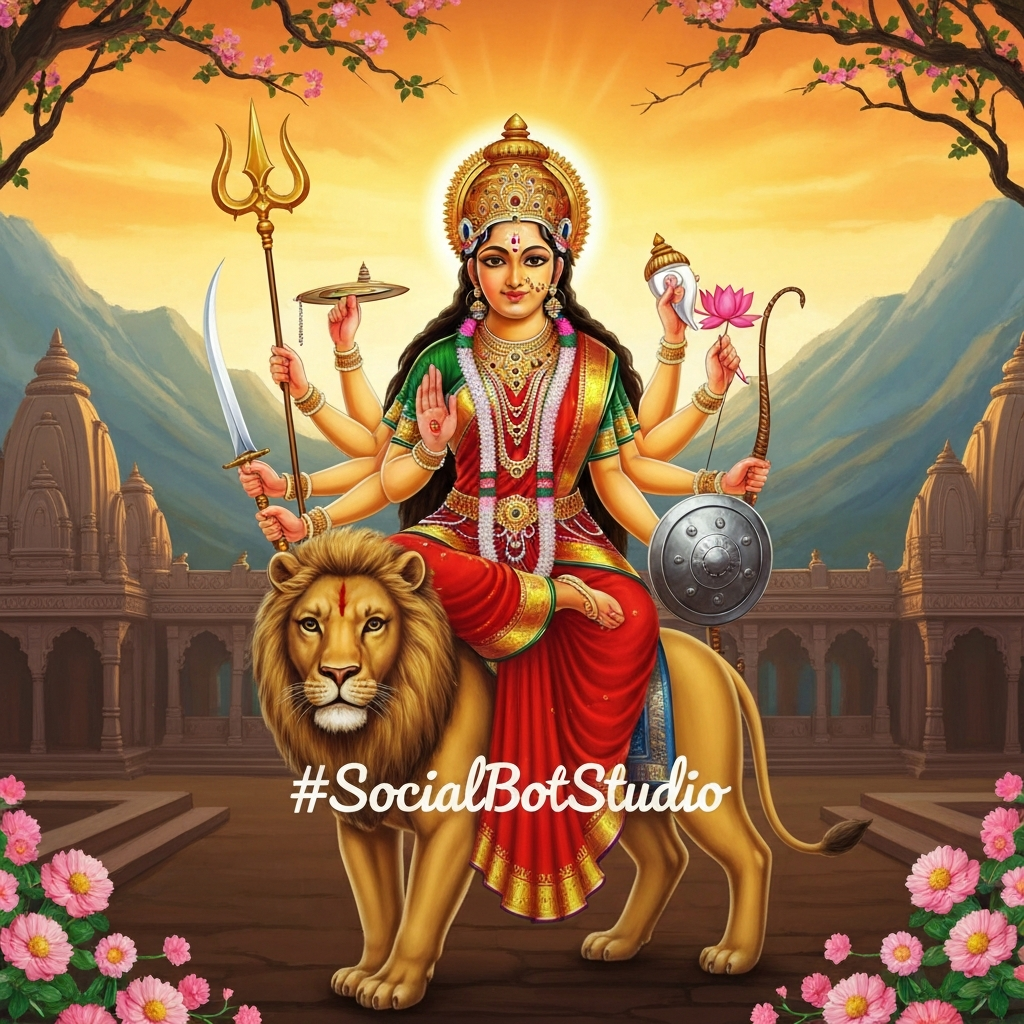
Namo Namo Durge Sukhkarni
नमो नमो दुर्गे सुख करनी|Namo Namo Durge Sukhkarni|Salutations to Durga, Giver of Happiness
Also known as: Durga Sukhkarni · Namo Namo Durge

Cover image generated by AI · #Greetingify · #SocialBotStudio
नमो नमो दुर्गे सुख करनी, नमो नमो दुर्गे दुःख हरनी ॥ निरंकार है ज्योति तुम्हारी, तिहूं लोक फैली उजियारी ॥ शशि ललाट मुख महाविशाला, नेत्र लाल भृकुटी विकराला ॥ रूप मातु को अधिक सुहावे, दरस करत जन अति सुख पावे ॥ तुम संसार शक्ति कहलावो, पुत्र दे सब को फल पावो ॥ शिव शक्ति तुम मातु हमारी, आदि भवानी तुम बलिहारी ॥ तुम्हरी महिमा कोई न जाने, तुम ही जानो तुम ही पहचाने ॥ जो नर सुमिरन करे तुम्हारा, कष्ट मिटे सब होय निस्तारा ॥ अन्न धन दे तुम ही सुख पावो, भय संकट सब दूर भगाओ ॥ ध्यान धरे जो नर मन लाई, सुख संपत्ति घर आवे भाई ॥ तुम ही हो जग की प्रतिपाला, तुम ही हो जग की रखवाला ॥ तुम ही हो जग की जननी, तुम ही हो जग की भरनी ॥ तुम ही हो जग की पालनहारी, तुम ही हो जग की तारनहारी ॥ तुम ही हो जग की माता, तुम ही हो जग की विधाता ॥ तुम ही हो जग की धात्री, तुम ही हो जग की रात्रि ॥
नमो नमो दुर्गे सुख करनी, नमो नमो दुर्गे दुःख हरनी ॥ निरंकार है ज्योति तुम्हारी, तिहूं लोक फैली उजियारी ॥ शशि ललाट मुख महाविशाला, नेत्र लाल भृकुटी विकराला ॥ रूप मातु को अधिक सुहावे, दरस करत जन अति सुख पावे ॥ तुम संसार शक्ति कहलावो, पुत्र दे सब को फल पावो ॥ शिव शक्ति तुम मातु हमारी, आदि भवानी तुम बलिहारी ॥ तुम्हरी महिमा कोई न जाने, तुम ही जानो तुम ही पहचाने ॥ जो नर सुमिरन करे तुम्हारा, कष्ट मिटे सब होय निस्तारा ॥ अन्न धन दे तुम ही सुख पावो, भय संकट सब दूर भगाओ ॥ ध्यान धरे जो नर मन लाई, सुख संपत्ति घर आवे भाई ॥ तुम ही हो जग की प्रतिपाला, तुम ही हो जग की रखवाला ॥ तुम ही हो जग की जननी, तुम ही हो जग की भरनी ॥ तुम ही हो जग की पालनहारी, तुम ही हो जग की तारनहारी ॥ तुम ही हो जग की माता, तुम ही हो जग की विधाता ॥ तुम ही हो जग की धात्री, तुम ही हो जग की रात्रि ॥
Salutations, salutations to Durga, the giver of happiness; Salutations, salutations to Durga, the remover of sorrow. Formless is your divine light, its radiance spread across all three worlds. With a moon-like forehead and a vast face, red eyes and fierce brows. Mother's form is exceedingly beautiful, devotees find immense joy upon seeing it. You are called the power of the world, you grant children and all fruits (of desires). You are our Mother, the power of Shiva, O Adi Bhavani, we sacrifice ourselves to you. No one knows your glory, only you know and recognize yourself. Whoever meditates upon you, their troubles vanish, and they find liberation. You grant food, wealth, and happiness, you drive away all fear and danger. Whoever meditates with a focused mind, prosperity and wealth come to their home, O brother. You are the protector of the world, you are the guardian of the world. You are the mother of the world, you are the sustainer of the world. You are the nurturer of the world, you are the liberator of the world. You are the mother of the world, you are the creator of the world. You are the nourisher of the world, you are the night of the world.
The translation aims for a faithful rendition of the devotional sentiment and literal meaning. Some poetic nuances, especially regarding the multifaceted nature of 'Shakti' and 'Maatu', are conveyed through context.
The bhajan 'Namo Namo Durge Sukhkarni' is a quintessential example of Hindu devotional poetry, deeply ingrained in the spiritual fabric of North India. Its origins are largely attributed to the oral tradition, making it difficult to pinpoint a specific author or exact period of composition. However, its simple yet profound language suggests a development over centuries, evolving within the Bhakti movement, which emphasized personal devotion to a deity. This particular bhajan is dedicated to Goddess Durga, a principal deity in Hinduism, revered as the supreme goddess and protector of righteousness. It reflects the common devotional practice of praising the deity's attributes and seeking solace and blessings. Culturally, this bhajan holds immense significance, especially during festivals dedicated to Goddess Durga. It is a staple during Navaratri, a nine-night festival celebrated with great fervor across India, particularly in the northern states. During this period, devotees observe fasts, perform pujas, and sing bhajans like 'Namo Namo Durge Sukhkarni' to invoke the goddess's blessings. It is also sung during other auspicious occasions, daily prayers (aarti), and in temples, homes, and community gatherings. The bhajan serves as a means for devotees to express their love, reverence, and surrender to the divine Mother, believing that her grace can remove all obstacles and bestow happiness. In terms of performance, 'Namo Namo Durge Sukhkarni' is typically sung in a congregational setting, often accompanied by traditional Indian instruments such as the harmonium, tabla, dholak, and cymbals (manjira). It can be sung by individuals, groups, or a lead singer with a chorus responding. The tempo is usually moderate, allowing for easy participation and a meditative atmosphere. Its repetitive and rhythmic structure makes it accessible to all, regardless of musical training, fostering a sense of unity and shared devotion among participants. The bhajan's melodic simplicity ensures that its spiritual message resonates deeply with the listeners. Today, 'Namo Namo Durge Sukhkarni' continues to be a cornerstone of Hindu devotional practice. Its timeless appeal lies in its direct address to the divine Mother, seeking protection, prosperity, and liberation from suffering. It is widely available on digital platforms, sung by various artists, and remains a beloved part of daily prayers and festival celebrations. Its preservation is crucial for maintaining the rich oral and musical heritage of Hindu Bhakti, offering a spiritual anchor for millions and connecting contemporary generations to ancient devotional traditions. It embodies the enduring faith in the benevolent power of the divine feminine.
Historical Background
Originating from the oral tradition of North Indian Bhakti movement, likely evolving over centuries. Its simple Hindi lyrics made it accessible to the masses, contributing to its widespread popularity as a devotional hymn to Goddess Durga.
Cultural Significance
A deeply cherished bhajan that embodies the reverence for Goddess Durga as the supreme divine mother and protector. It is central to Navaratri celebrations and fosters a sense of community and spiritual connection among devotees. Its widespread popularity ensures the continuity of devotional practices.
Usage & Performance Context
Sung during daily prayers, Aarti, Hindu festivals (especially Navaratri, Durga Puja), temple worship, home pujas, and community devotional gatherings. Performed by devotees of all ages, individually or in groups.
भजन 'नमो नमो दुर्गे सुख करनी' हिन्दू भक्ति काव्य का एक उत्कृष्ट उदाहरण है, जो उत्तरी भारत के आध्यात्मिक ताने-बाने में गहराई से समाया हुआ है। इसकी उत्पत्ति मुख्य रूप से मौखिक परंपरा से हुई है, जिससे इसके विशिष्ट लेखक या रचना की सटीक अवधि का पता लगाना मुश्किल है। हालांकि, इसकी सरल लेकिन गहन भाषा भक्ति आंदोलन के सदियों के विकास को दर्शाती है, जिसने एक देवता के प्रति व्यक्तिगत भक्ति पर जोर दिया। यह विशेष भजन देवी दुर्गा को समर्पित है, जो हिन्दू धर्म में एक प्रमुख देवी हैं, जिन्हें सर्वोच्च देवी और धर्म की रक्षक के रूप में पूजा जाता है। यह भजन देवता के गुणों की प्रशंसा करने और सांत्वना तथा आशीर्वाद प्राप्त करने की सामान्य भक्ति प्रथा को दर्शाता है। सांस्कृतिक रूप से, इस भजन का अत्यधिक महत्व है, विशेषकर देवी दुर्गा को समर्पित त्योहारों के दौरान। यह नवरात्रि के दौरान एक मुख्य भजन है, जो पूरे भारत में, विशेष रूप से उत्तरी राज्यों में बड़े उत्साह के साथ मनाया जाने वाला नौ रातों का त्योहार है। इस अवधि के दौरान, भक्त उपवास रखते हैं, पूजा करते हैं, और देवी के आशीर्वाद का आह्वान करने के लिए 'नमो नमो दुर्गे सुख करनी' जैसे भजन गाते हैं। इसे अन्य शुभ अवसरों, दैनिक प्रार्थनाओं (आरती), और मंदिरों, घरों तथा सामुदायिक सभाओं में भी गाया जाता है। यह भजन भक्तों के लिए दिव्य माँ के प्रति अपने प्रेम, श्रद्धा और समर्पण को व्यक्त करने का एक माध्यम है, यह विश्वास करते हुए कि उनकी कृपा सभी बाधाओं को दूर कर सकती है और सुख प्रदान कर सकती है। प्रदर्शन के संदर्भ में, 'नमो नमो दुर्गे सुख करनी' आमतौर पर एक सामूहिक वातावरण में गाया जाता है, अक्सर हारमोनियम, तबला, ढोलक और मंजीरा जैसे पारंपरिक भारतीय वाद्ययंत्रों के साथ। इसे व्यक्ति, समूह, या एक मुख्य गायक द्वारा कोरस के साथ गाया जा सकता है। इसकी गति आमतौर पर मध्यम होती है, जो आसान भागीदारी और एक ध्यानपूर्ण वातावरण के लिए अनुमति देती है। इसकी दोहराव वाली और लयबद्ध संरचना इसे संगीत प्रशिक्षण की परवाह किए बिना सभी के लिए सुलभ बनाती है, प्रतिभागियों के बीच एकता और साझा भक्ति की भावना को बढ़ावा देती है। भजन की मधुर सादगी यह सुनिश्चित करती है कि इसका आध्यात्मिक संदेश श्रोताओं के साथ गहराई से प्रतिध्वनित हो। आज भी, 'नमो नमो दुर्गे सुख करनी' हिन्दू भक्ति प्रथा का एक आधारशिला बना हुआ है। इसकी कालातीत अपील दिव्य माँ को सीधे संबोधित करने में निहित है, जो सुरक्षा, समृद्धि और दुख से मुक्ति की तलाश में है। यह विभिन्न कलाकारों द्वारा गाए गए डिजिटल प्लेटफार्मों पर व्यापक रूप से उपलब्ध है, और दैनिक प्रार्थनाओं तथा त्योहार समारोहों का एक प्रिय हिस्सा बना हुआ है। हिन्दू भक्ति की समृद्ध मौखिक और संगीत विरासत को बनाए रखने के लिए इसका संरक्षण महत्वपूर्ण है, जो लाखों लोगों के लिए एक आध्यात्मिक आधार प्रदान करता है और समकालीन पीढ़ियों को प्राचीन भक्ति परंपराओं से जोड़ता है। यह दिव्य स्त्री शक्ति की परोपकारी शक्ति में स्थायी विश्वास का प्रतीक है।
What is 'Namo Namo Durge Sukhkarni'?
'Namo Namo Durge Sukhkarni' is a well-known Hindu devotional song (bhajan) in Hindi, dedicated to Goddess Durga. It praises her as the source of happiness and the remover of all sorrows and obstacles.
When is 'Namo Namo Durge Sukhkarni' typically sung?
This bhajan is commonly sung during Hindu festivals, especially Navaratri and Durga Puja, as well as during daily prayers, Aarti ceremonies, and other auspicious occasions dedicated to Goddess Durga in temples and homes across North India.
What is the meaning of 'Sukhkarni Dukhharni'?
'Sukhkarni' means 'one who brings happiness' or 'giver of joy', while 'Dukhharni' means 'one who removes sorrow' or 'remover of pain'. Together, they describe Goddess Durga's benevolent role in the lives of her devotees.
Is 'Namo Namo Durge Sukhkarni' a public domain work?
Yes, 'Namo Namo Durge Sukhkarni' is widely considered to be in the public domain. Its origins are rooted in the oral tradition of the Bhakti movement, with no specific author or copyright holder identified over centuries of popular use.
What are the spiritual benefits of chanting this bhajan?
Devotees believe that chanting 'Namo Namo Durge Sukhkarni' invokes Goddess Durga's blessings, leading to the removal of troubles, protection from dangers, attainment of happiness, prosperity, and ultimately, spiritual liberation (moksha).
Region
Uttar Pradesh, India
Language
Hindi (Devanagari)
Themes
Contributor
Anonymous
Based on 0 ratings.