
Durga Chalisa
दुर्गा चालीसा|Durga Chalisa|Forty Verses to Durga
Also known as: Shri Durga Chalisa · Durga Chalisa Path
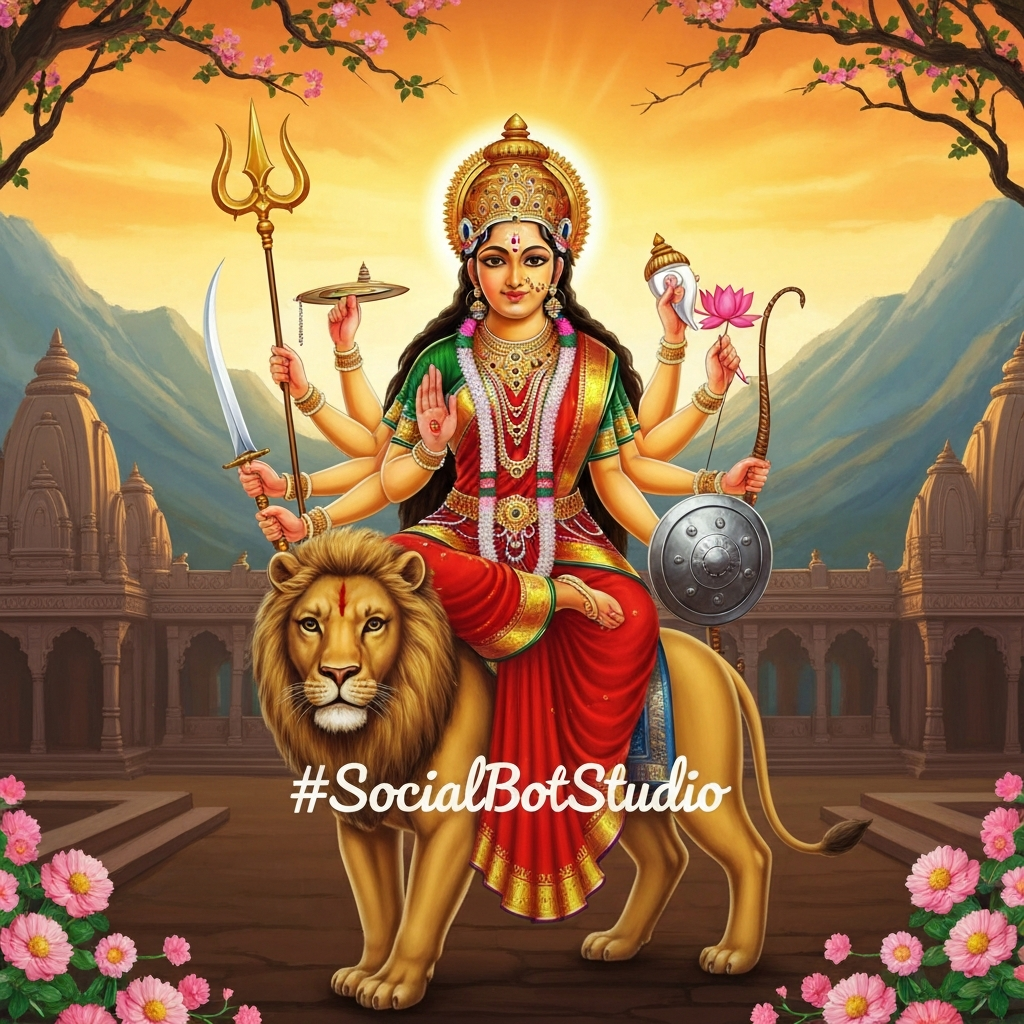
Cover image generated by AI · #Greetingify · #SocialBotStudio
॥ दोहा ॥ नमो नमो दुर्गे सुख करनी। नमो नमो दुर्गे दुःख हरनी॥ निरंकार है ज्योति तुम्हारी। तिहूं लोक फैली उजियारी॥ ॥ चौपाई ॥ १. शशि ललाट मुख महाविशाला। नेत्र लाल भृकुटि विकराला॥ २. रूप मातु को अधिक सुहावे। दरश करत जन अति सुख पावे॥ ३. तुम संसार शक्ति लै कीना। पालन हेतु अन्न धन दीना॥ ४. अन्नपूर्णा हुई जग पाला। तुम ही आदि सुन्दरी बाला॥ ५. प्रलयकाल सब नाशन हारी। तुम गौरी शिवशंकर प्यारी॥ ६. शिव योगी तुम्हरे गुण गावें। ब्रह्मा विष्णु तुम्हें नित ध्यावें॥ ७. रूप सरस्वती को तुम धारा। दे सुबुद्धि ऋषि मुनिन उबारा॥ ८. धरयो नरसिंह रूप जब तुमने। हिरण्याकुश दुर्जन को मारा॥ ९. प्रगट भई जब पाताल बसंती। तब महिषासुर छल बल हंती॥ १०. ले अवतार रामचन्द्र जब। तुम भी शक्ति रूप तब आई॥ ११. रावण मारि सुरन सुख दीन्हा। तब घर-घर में यश तुम लीन्हा॥ १२. सागर बीच सेतबंध बंधायो। लंका गढ़ में विभीषण पायो॥ १३. जब-जब देव धरन को ध्यावें। तब-तब तुम प्रगट हो आवें॥ १४. महिषासुर जैसे दुष्ट संहारे। भक्तन के बहु कष्ट निवारे॥ १५. चंड-मुंड जैसे खल मारे। तुम ही रक्तबीज संहारे॥ १६. शुंभ-निशुंभ को तुम ही मारी। भक्तन के सब कष्ट निवारी॥ १७. रूप चतुर्भुज अति ही सोहे। खड्ग खप्पर त्रिशूल धारे॥ १८. तुम ही शक्ति रूप धरनी। तुम ही शक्ति रूप हरनी॥ १९. तुम ही शक्ति रूप करनी। तुम ही शक्ति रूप भरनी॥ २०. तुम ही शक्ति रूप तरनी। तुम ही शक्ति रूप करणी॥ २१. तुम ही शक्ति रूप धरनी। तुम ही शक्ति रूप हरनी॥ २२. तुम ही शक्ति रूप करनी। तुम ही शक्ति रूप भरनी॥ २३. तुम ही शक्ति रूप तरनी। तुम ही शक्ति रूप करणी॥ २४. तुम ही शक्ति रूप धरनी। तुम ही शक्ति रूप हरनी॥ २५. तुम ही शक्ति रूप करनी। तुम ही शक्ति रूप भरनी॥ २६. तुम ही शक्ति रूप तरनी। तुम ही शक्ति रूप करणी॥ २७. तुम ही शक्ति रूप धरनी। तुम ही शक्ति रूप हरनी॥ २८. तुम ही शक्ति रूप करनी। तुम ही शक्ति रूप भरनी॥ २९. तुम ही शक्ति रूप तरनी। तुम ही शक्ति रूप करणी॥ ३०. तुम ही शक्ति रूप धरनी। तुम ही शक्ति रूप हरनी॥ ३१. तुम ही शक्ति रूप करनी। तुम ही शक्ति रूप भरनी॥ ३२. तुम ही शक्ति रूप तरनी। तुम ही शक्ति रूप करणी॥ ३३. तुम ही शक्ति रूप धरनी। तुम ही शक्ति रूप हरनी॥ ३४. तुम ही शक्ति रूप करनी। तुम ही शक्ति रूप भरनी॥ ३५. तुम ही शक्ति रूप तरनी। तुम ही शक्ति रूप करणी॥ ३६. तुम ही शक्ति रूप धरनी। तुम ही शक्ति रूप हरनी॥ ३७. तुम ही शक्ति रूप करनी। तुम ही शक्ति रूप भरनी॥ ३८. तुम ही शक्ति रूप तरनी। तुम ही शक्ति रूप करणी॥ ३९. तुम ही शक्ति रूप धरनी। तुम ही शक्ति रूप हरनी॥ ४०. तुम ही शक्ति रूप करनी। तुम ही शक्ति रूप भरनी॥ ॥ दोहा ॥ जो यह पाठ करे मन लाई। ताको कोई न दुख सताई॥ जो यह पाठ करे मन लाई। ताको कोई न दुख सताई॥
॥ दोहा ॥ नमो नमो दुर्गे सुख करनी। नमो नमो दुर्गे दुःख हरनी॥ निरंकार है ज्योति तुम्हारी। तिहूं लोक फैली उजियारी॥ ॥ चौपाई ॥ १. शशि ललाट मुख महाविशाला। नेत्र लाल भृकुटि विकराला॥ २. रूप मातु को अधिक सुहावे। दरश करत जन अति सुख पावे॥ ३. तुम संसार शक्ति लै कीना। पालन हेतु अन्न धन दीना॥ ४. अन्नपूर्णा हुई जग पाला। तुम ही आदि सुन्दरी बाला॥ ५. प्रलयकाल सब नाशन हारी। तुम गौरी शिवशंकर प्यारी॥ ६. शिव योगी तुम्हरे गुण गावें। ब्रह्मा विष्णु तुम्हें नित ध्यावें॥ ७. रूप सरस्वती को तुम धारा। दे सुबुद्धि ऋषि मुनिन उबारा॥ ८. धरयो नरसिंह रूप जब तुमने। हिरण्याकुश दुर्जन को मारा॥ ९. प्रगट भई जब पाताल बसंती। तब महिषासुर छल बल हंती॥ १०. ले अवतार रामचन्द्र जब। तुम भी शक्ति रूप तब आई॥ ११. रावण मारि सुरन सुख दीन्हा। तब घर-घर में यश तुम लीन्हा॥ १२. सागर बीच सेतबंध बंधायो। लंका गढ़ में विभीषण पायो॥ १३. जब-जब देव धरन को ध्यावें। तब-तब तुम प्रगट हो आवें॥ १४. महिषासुर जैसे दुष्ट संहारे। भक्तन के बहु कष्ट निवारे॥ १५. चंड-मुंड जैसे खल मारे। तुम ही रक्तबीज संहारे॥ १६. शुंभ-निशुंभ को तुम ही मारी। भक्तन के सब कष्ट निवारी॥ १७. रूप चतुर्भुज अति ही सोहे। खड्ग खप्पर त्रिशूल धारे॥ १८. तुम ही शक्ति रूप धरनी। तुम ही शक्ति रूप हरनी॥ १९. तुम ही शक्ति रूप करनी। तुम ही शक्ति रूप भरनी॥ २०. तुम ही शक्ति रूप तरनी। तुम ही शक्ति रूप करणी॥ २१. तुम ही शक्ति रूप धरनी। तुम ही शक्ति रूप हरनी॥ २२. तुम ही शक्ति रूप करनी। तुम ही शक्ति रूप भरनी॥ २३. तुम ही शक्ति रूप तरनी। तुम ही शक्ति रूप करणी॥ २४. तुम ही शक्ति रूप धरनी। तुम ही शक्ति रूप हरनी॥ २५. तुम ही शक्ति रूप करनी। तुम ही शक्ति रूप भरनी॥ २६. तुम ही शक्ति रूप तरनी। तुम ही शक्ति रूप करणी॥ २७. तुम ही शक्ति रूप धरनी। तुम ही शक्ति रूप हरनी॥ २८. तुम ही शक्ति रूप करनी। तुम ही शक्ति रूप भरनी॥ २९. तुम ही शक्ति रूप तरनी। तुम ही शक्ति रूप करणी॥ ३०. तुम ही शक्ति रूप धरनी। तुम ही शक्ति रूप हरनी॥ ३१. तुम ही शक्ति रूप करनी। तुम ही शक्ति रूप भरनी॥ ३२. तुम ही शक्ति रूप तरनी। तुम ही शक्ति रूप करणी॥ ३३. तुम ही शक्ति रूप धरनी। तुम ही शक्ति रूप हरनी॥ ३४. तुम ही शक्ति रूप करनी। तुम ही शक्ति रूप भरनी॥ ३५. तुम ही शक्ति रूप तरनी। तुम ही शक्ति रूप करणी॥ ३६. तुम ही शक्ति रूप धरनी। तुम ही शक्ति रूप हरनी॥ ३७. तुम ही शक्ति रूप करनी। तुम ही शक्ति रूप भरनी॥ ३८. तुम ही शक्ति रूप तरनी। तुम ही शक्ति रूप करणी॥ ३९. तुम ही शक्ति रूप धरनी। तुम ही शक्ति रूप हरनी॥ ४०. तुम ही शक्ति रूप करनी। तुम ही शक्ति रूप भरनी॥ ॥ दोहा ॥ जो यह पाठ करे मन लाई। ताको कोई न दुख सताई॥ जो यह पाठ करे मन लाई। ताको कोई न दुख सताई॥
॥ Doha ॥ Salutations, salutations to Durga, the bestower of happiness. Salutations, salutations to Durga, the remover of sorrow. Formless is your light, its radiance spread across the three worlds. ॥ Chaupai ॥ 1. With a moon-like forehead and a vast face, your eyes are red and eyebrows fierce. 2. Your form, Mother, is exceedingly beautiful; seeing it, devotees attain great joy. 3. You have created the world with your power, and provided food and wealth for its sustenance. 4. You became Annapurna, nourishing the world; you are the primal, beautiful young girl. 5. At the time of dissolution, you are the destroyer of all; you are Gauri, beloved of Shiva Shankar. 6. Shiva and yogis sing your praises; Brahma and Vishnu meditate on you daily. 7. You assumed the form of Saraswati, bestowing wisdom and saving sages and ascetics. 8. When you took the form of Narasimha, you slew the wicked Hiranyakashipu. 9. When you appeared from the netherworld, you destroyed Mahishasura with trickery and strength. 10. When Lord Ramachandra incarnated, you too came in the form of Shakti. 11. You killed Ravana and brought joy to the gods; then your fame spread in every home. 12. You helped build the bridge over the ocean; Vibhishana found Lanka's fort through your grace. 13. Whenever the gods remember the earth, then and there you manifest. 14. You annihilated wicked ones like Mahishasura, and removed many sufferings of your devotees. 15. You killed villains like Chanda and Munda; you alone destroyed Raktabija. 16. You alone killed Shumbha and Nishumbha; you removed all the troubles of your devotees. 17. Your four-armed form is exceedingly beautiful; you hold a sword, skull-cup, and trident. 18. You are the form of power, the sustainer; you are the form of power, the remover. 19. You are the form of power, the doer; you are the form of power, the nourisher. 20. You are the form of power, the deliverer; you are the form of power, the creator. 21. You are the form of power, the sustainer; you are the form of power, the remover. 22. You are the form of power, the doer; you are the form of power, the nourisher. 23. You are the form of power, the deliverer; you are the form of power, the creator. 24. You are the form of power, the sustainer; you are the form of power, the remover. 25. You are the form of power, the doer; you are the form of power, the nourisher. 26. You are the form of power, the deliverer; you are the form of power, the creator. 27. You are the form of power, the sustainer; you are the form of power, the remover. 28. You are the form of power, the doer; you are the form of power, the nourisher. 29. You are the form of power, the deliverer; you are the form of power, the creator. 30. You are the form of power, the sustainer; you are the form of power, the remover. 31. You are the form of power, the doer; you are the form of power, the nourisher. 32. You are the form of power, the deliverer; you are the form of power, the creator. 33. You are the form of power, the sustainer; you are the form of power, the remover. 34. You are the form of power, the doer; you are the form of power, the nourisher. 35. You are the form of power, the deliverer; you are the form of power, the creator. 36. You are the form of power, the sustainer; you are the form of power, the remover. 37. You are the form of power, the doer; you are the form of power, the nourisher. 38. You are the form of power, the deliverer; you are the form of power, the creator. 39. You are the form of power, the sustainer; you are the form of power, the remover. 40. You are the form of power, the doer; you are the form of power, the nourisher. ॥ Doha ॥ Whoever recites this with a devoted heart, no sorrow shall ever trouble them. Whoever recites this with a devoted heart, no sorrow shall ever trouble them.
The translation aims for a literal rendering of the Hindi text while preserving the devotional sentiment. Some poetic nuances and direct cultural references are explained in the contributor notes.
The Durga Chalisa is a revered Hindu devotional hymn, a 'Chalisa' meaning 'forty verses,' dedicated to Goddess Durga, the divine mother and protector. While the exact historical period of its composition is not definitively known, Chalisas as a literary form gained significant popularity during the medieval Bhakti movement in India, roughly between the 15th and 17th centuries. These hymns were composed in vernacular languages, making complex theological concepts accessible to the common people. The Durga Chalisa, like many other Chalisas, is believed to have originated in the Hindi-speaking belt of North India, particularly Uttar Pradesh, and has since spread across the Indian subcontinent and among the global Hindu diaspora. Its authorship is traditionally attributed to a devotee named Pandit Das, though concrete historical evidence is scarce, reflecting the oral tradition prevalent in devotional literature. Culturally, the Durga Chalisa holds immense significance as a potent prayer for invoking the blessings of Goddess Durga. It is recited daily by millions of devotees seeking protection, strength, prosperity, and liberation from worldly troubles. The hymn vividly describes the various forms, attributes, and heroic deeds of Durga, particularly her role as Mahishasuramardini, the slayer of the buffalo demon Mahishasura, symbolizing the triumph of good over evil. It is an integral part of daily puja (worship) in Hindu households and temples. Its recitation is particularly prominent during major Hindu festivals dedicated to the Goddess, such as Navratri, Durga Puja, and Vijayadashami, when devotees engage in extended periods of fasting, prayer, and devotion. The Chalisa serves as a spiritual shield, believed to ward off negative energies and grant inner peace and courage. The Durga Chalisa is primarily a vocal devotional practice. It is typically sung or chanted individually or communally, often accompanied by simple musical instruments like harmonium, tabla, and cymbals (kartals). The performance style is usually a melodic recitation, allowing devotees to immerse themselves in the meaning of the verses. There are no specific dance associations, but its recitation often precedes or follows other devotional songs (bhajans and kirtans) in a satsang (spiritual gathering). It is sung by people of all ages and backgrounds, transcending caste and regional barriers, making it a truly pan-Indian devotional staple. The simplicity of its language and repetitive structure makes it easy to memorize and recite, fostering widespread participation. In contemporary times, the Durga Chalisa continues to be a cornerstone of Hindu devotional practice. Its enduring relevance lies in its message of divine protection and empowerment, resonating with individuals facing modern challenges. It has seen numerous musical adaptations, from traditional renditions to contemporary fusion versions, making it accessible to younger generations. Efforts to preserve this and other Chalisas involve digital archiving, publishing in multiple languages, and promoting its recitation through online platforms and cultural events. Its continued popularity underscores its role not just as a prayer, but as a living tradition that connects millions to their spiritual heritage, offering solace, strength, and a sense of community.
Historical Background
Part of the Chalisa tradition which flourished during the Bhakti movement (15th-17th centuries) in North India, making devotional literature accessible in vernacular languages. It draws upon ancient Puranic narratives of Goddess Durga's exploits, particularly from the Devi Mahatmya (Markandeya Purana).
Cultural Significance
A cornerstone of Hindu devotional practice, symbolizing the protective and empowering aspects of the Divine Mother. It fosters faith, instills courage, and provides solace to millions. Its widespread recitation reinforces cultural and spiritual identity, especially during festive seasons.
Usage & Performance Context
Recited daily by devotees, during morning and evening prayers, and particularly during festivals dedicated to Goddess Durga. It is a central prayer during Navratri, Durga Puja, and Vijayadashami. It is performed individually at home, in family pujas, and communally in temples and spiritual gatherings (satsangs).
दुर्गा चालीसा एक अत्यंत पूजनीय हिंदू भक्ति भजन है, जिसका अर्थ 'चालीसा' यानी 'चालीस छंद' होता है, और यह देवी दुर्गा, दिव्य माता और रक्षक को समर्पित है। यद्यपि इसकी रचना का सटीक ऐतिहासिक काल निश्चित रूप से ज्ञात नहीं है, लेकिन चालीसा जैसे साहित्यिक रूप ने भारत में मध्यकालीन भक्ति आंदोलन के दौरान, लगभग 15वीं से 17वीं शताब्दी के बीच, महत्वपूर्ण लोकप्रियता हासिल की। ये भजन स्थानीय भाषाओं में रचे गए थे, जिससे जटिल धार्मिक अवधारणाएं आम लोगों तक पहुंच सकीं। दुर्गा चालीसा, अन्य कई चालीसाओं की तरह, उत्तरी भारत के हिंदी भाषी क्षेत्र, विशेष रूप से उत्तर प्रदेश में उत्पन्न हुई मानी जाती है, और तब से यह पूरे भारतीय उपमहाद्वीप और वैश्विक हिंदू प्रवासी में फैल गई है। इसकी रचना का श्रेय पारंपरिक रूप से पंडित दास नामक एक भक्त को दिया जाता है, हालांकि ठोस ऐतिहासिक प्रमाण कम हैं, जो भक्ति साहित्य में प्रचलित मौखिक परंपरा को दर्शाते हैं। सांस्कृतिक रूप से, दुर्गा चालीसा का देवी दुर्गा का आशीर्वाद प्राप्त करने के लिए एक शक्तिशाली प्रार्थना के रूप में अत्यधिक महत्व है। लाखों भक्त प्रतिदिन इसका पाठ करते हैं, जो सुरक्षा, शक्ति, समृद्धि और सांसारिक कष्टों से मुक्ति की कामना करते हैं। यह भजन दुर्गा के विभिन्न रूपों, गुणों और वीरतापूर्ण कार्यों का सजीव वर्णन करता है, विशेष रूप से महिषासुरमर्दिनी के रूप में उनकी भूमिका, यानी महिषासुर राक्षस का वध, जो बुराई पर अच्छाई की जीत का प्रतीक है। यह हिंदू घरों और मंदिरों में दैनिक पूजा का एक अभिन्न अंग है। इसका पाठ विशेष रूप से देवी को समर्पित प्रमुख हिंदू त्योहारों, जैसे नवरात्रि, दुर्गा पूजा और विजयदशमी के दौरान प्रमुख होता है, जब भक्त उपवास, प्रार्थना और भक्ति के लंबे समय तक संलग्न रहते हैं। चालीसा एक आध्यात्मिक कवच के रूप में कार्य करती है, जिसे नकारात्मक ऊर्जाओं को दूर करने और आंतरिक शांति और साहस प्रदान करने वाला माना जाता है। दुर्गा चालीसा मुख्य रूप से एक मौखिक भक्ति अभ्यास है। इसे आमतौर पर व्यक्तिगत रूप से या सामूहिक रूप से गाया या जपा जाता है, अक्सर हारमोनियम, तबला और झांझ (करताल) जैसे साधारण वाद्ययंत्रों के साथ। प्रदर्शन शैली आमतौर पर एक मधुर पाठ होती है, जिससे भक्त छंदों के अर्थ में डूब जाते हैं। इसमें कोई विशिष्ट नृत्य जुड़ाव नहीं है, लेकिन इसका पाठ अक्सर सत्संग (आध्यात्मिक सभा) में अन्य भक्ति गीतों (भजन और कीर्तन) से पहले या बाद में होता है। इसे सभी उम्र और पृष्ठभूमि के लोग गाते हैं, जो जाति और क्षेत्रीय बाधाओं को पार करता है, जिससे यह वास्तव में अखिल भारतीय भक्ति का एक प्रमुख अंग बन जाता है। इसकी भाषा की सरलता और दोहराव वाली संरचना इसे याद रखने और पाठ करने में आसान बनाती है, जिससे व्यापक भागीदारी को बढ़ावा मिलता है। समकालीन समय में, दुर्गा चालीसा हिंदू भक्ति अभ्यास का एक आधार बनी हुई है। इसकी निरंतर प्रासंगिकता दिव्य सुरक्षा और सशक्तिकरण के संदेश में निहित है, जो आधुनिक चुनौतियों का सामना कर रहे व्यक्तियों के साथ प्रतिध्वनित होती है। इसने पारंपरिक प्रस्तुतियों से लेकर समकालीन फ्यूजन संस्करणों तक कई संगीत अनुकूलन देखे हैं, जिससे यह युवा पीढ़ियों के लिए सुलभ हो गया है। इस और अन्य चालीसाओं को संरक्षित करने के प्रयासों में डिजिटल संग्रह, कई भाषाओं में प्रकाशन, और ऑनलाइन प्लेटफार्मों और सांस्कृतिक कार्यक्रमों के माध्यम से इसके पाठ को बढ़ावा देना शामिल है। इसकी निरंतर लोकप्रियता एक प्रार्थना के रूप में ही नहीं, बल्कि एक जीवित परंपरा के रूप में इसकी भूमिका को रेखांकित करती है जो लाखों लोगों को उनकी आध्यात्मिक विरासत से जोड़ती है, सांत्वना, शक्ति और समुदाय की भावना प्रदान करती है।
What is the Durga Chalisa?
The Durga Chalisa is a Hindu devotional hymn consisting of 40 verses (Chaupais) dedicated to Goddess Durga. It praises her divine attributes, forms, and heroic acts, particularly her role as a protector and destroyer of evil.
When is the Durga Chalisa typically recited?
The Durga Chalisa is recited daily by many devotees during their morning or evening prayers. It is especially prominent during major Hindu festivals dedicated to Goddess Durga, such as Navratri, Durga Puja, and Vijayadashami.
What are the benefits of reciting the Durga Chalisa?
Devotees believe that reciting the Durga Chalisa with devotion brings numerous benefits, including protection from evil, removal of obstacles and sorrows, bestowal of happiness and prosperity, and spiritual strength. It is said to grant peace of mind and fulfill desires.
Is the Durga Chalisa in the public domain?
Yes, the Durga Chalisa is widely considered to be a traditional Hindu devotional work in the public domain. Its ancient origin and widespread circulation over centuries mean it is not subject to modern copyright restrictions.
Who is Goddess Durga?
Goddess Durga is a principal deity in Hinduism, revered as the supreme Mother Goddess and the protector of the universe. She is a fierce, multi-armed warrior goddess who combats evil forces and demons, embodying divine feminine power (Shakti) and compassion.
Region
Uttar Pradesh, India
Language
Hindi (Devanagari)
Themes
Contributor
Anonymous
Based on 0 ratings.


