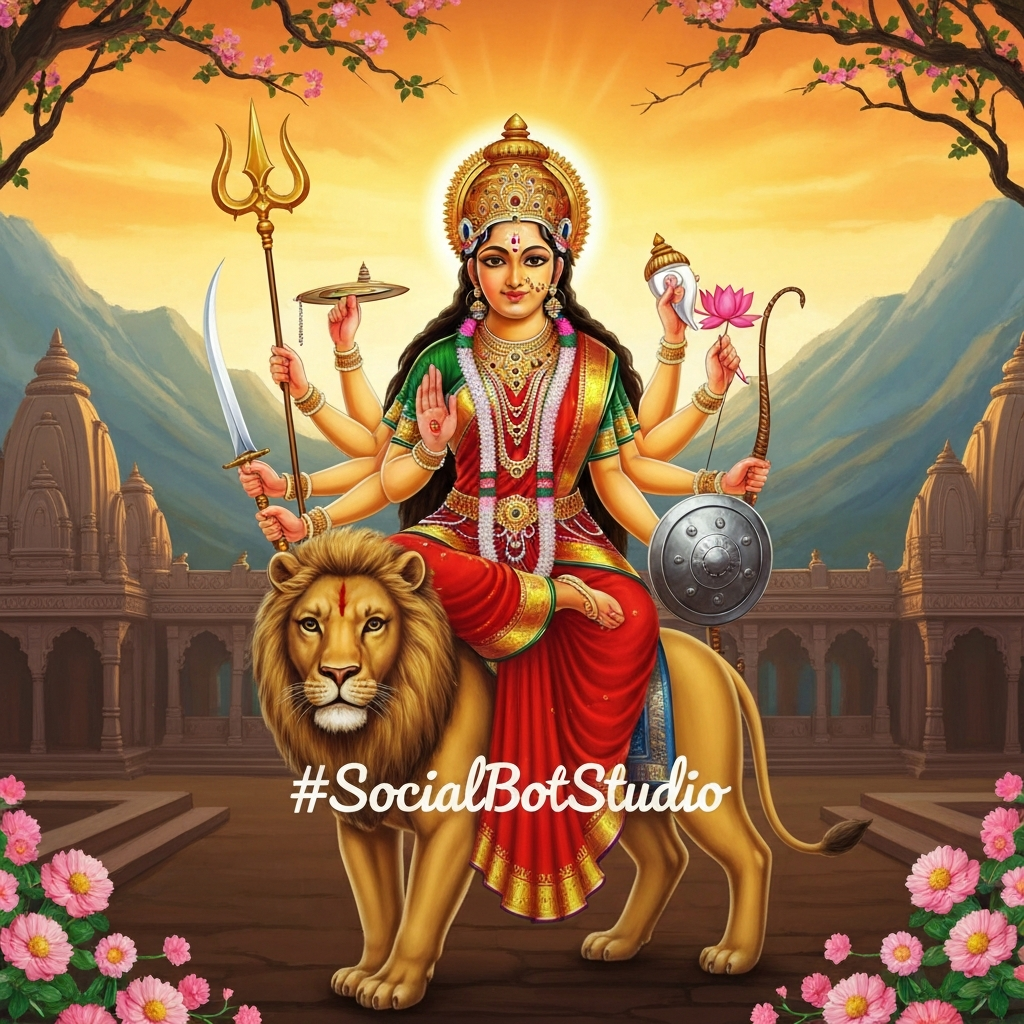
Jai Ambe Gauri Aarti
जय अम्बे गौरी आरती|Jai Ambe Gauri Aarti|Victory to Mother Gauri Aarti
Also known as: Ambe Maa Ki Aarti · Durga Aarti · Om Jai Ambe Gauri · ॐ जय अम्बे गौरी · Ambe Gauri Aarti

Cover image generated by AI · #Greetingify · #SocialBotStudio
जय अम्बे गौरी, मैया जय श्यामा गौरी। तुमको निशदिन ध्यावत, हरि ब्रह्मा शिवरी॥ ॐ जय अम्बे गौरी॥ माँग सिन्दूर विराजत, टीको मृगमद को। उज्जवल से दोउ नैना, चन्द्रवदन नीको॥ ॐ जय अम्बे गौरी॥ कनक समान कलेवर, रक्ताम्बर राजै। रक्तपुष्प गल माला, कण्ठन पर साजै॥ ॐ जय अम्बे गौरी॥ केहरि वाहन राजत, खड्ग खप्परधारी। सुर-नर-मुनि-जन सेवत, तिनके दुखहारी॥ ॐ जय अम्बे गौरी॥ कानन कुण्डल शोभित, नासाग्रे मोती। कोटिक चन्द्र दिवाकर, सम राजत ज्योति॥ ॐ जय अम्बे गौरी॥ शुम्भ-निशुम्भ बिदारे, महिषासुर घाती। धूम्र विलोचन नैना, निशदिन मदमाती॥ ॐ जय अम्बे गौरी॥ चण्ड-मुण्ड संहारे, शोणित बीज हरे। मधु-कैटभ दोउ मारे, सुर भयहीन करे॥ ॐ जय अम्बे गौरी॥ ब्रह्माणी, रुद्राणी, तुम कमला रानी। आगम-निगम-बखानी, तुम शिव पटरानी॥ ॐ जय अम्बे गौरी॥ चौंसठ योगिनी मंगल गावत, नृत्य करत भैरूँ। बाजत ताल मृदंगा, अरु बाजत डमरु॥ ॐ जय अम्बे गौरी॥ तुम ही जग की माता, तुम ही हो भरता। भक्तन की दु:ख हरता, सुख सम्पत्ति करता॥ ॐ जय अम्बे गौरी॥ भुजा चार अति शोभित, वर-मुद्रा धारी। मनवान्छित फल पावत, सेवत नर-नारी॥ ॐ जय अम्बे गौरी॥ कन्चन थाल विराजत, अगर कपूर बाती। श्रीमालकेतु में राजत, कोटि रतन ज्योति॥ ॐ जय अम्बे गौरी॥ श्री अम्बेजी की आरती, जो कोई नर गावै। कहत शिवानन्द स्वामी, सुख-सम्पत्ति पावै॥ ॐ जय अम्बे गौरी॥
जय अम्बे गौरी, मैया जय श्यामा गौरी। तुमको निशदिन ध्यावत, हरि ब्रह्मा शिवरी॥ ॐ जय अम्बे गौरी॥ माँग सिन्दूर विराजत, टीको मृगमद को। उज्जवल से दोउ नैना, चन्द्रवदन नीको॥ ॐ जय अम्बे गौरी॥ कनक समान कलेवर, रक्ताम्बर राजै। रक्तपुष्प गल माला, कण्ठन पर साजै॥ ॐ जय अम्बे गौरी॥ केहरि वाहन राजत, खड्ग खप्परधारी। सुर-नर-मुनि-जन सेवत, तिनके दुखहारी॥ ॐ जय अम्बे गौरी॥ कानन कुण्डल शोभित, नासाग्रे मोती। कोटिक चन्द्र दिवाकर, सम राजत ज्योति॥ ॐ जय अम्बे गौरी॥ शुम्भ-निशुम्भ बिदारे, महिषासुर घाती। धूम्र विलोचन नैना, निशदिन मदमाती॥ ॐ जय अम्बे गौरी॥ चण्ड-मुण्ड संहारे, शोणित बीज हरे। मधु-कैटभ दोउ मारे, सुर भयहीन करे॥ ॐ जय अम्बे गौरी॥ ब्रह्माणी, रुद्राणी, तुम कमला रानी। आगम-निगम-बखानी, तुम शिव पटरानी॥ ॐ जय अम्बे गौरी॥ चौंसठ योगिनी मंगल गावत, नृत्य करत भैरूँ। बाजत ताल मृदंगा, अरु बाजत डमरु॥ ॐ जय अम्बे गौरी॥ तुम ही जग की माता, तुम ही हो भरता। भक्तन की दु:ख हरता, सुख सम्पत्ति करता॥ ॐ जय अम्बे गौरी॥ भुजा चार अति शोभित, वर-मुद्रा धारी। मनवान्छित फल पावत, सेवत नर-नारी॥ ॐ जय अम्बे गौरी॥ कन्चन थाल विराजत, अगर कपूर बाती। श्रीमालकेतु में राजत, कोटि रतन ज्योति॥ ॐ जय अम्बे गौरी॥ श्री अम्बेजी की आरती, जो कोई नर गावै। कहत शिवानन्द स्वामी, सुख-सम्पत्ति पावै॥ ॐ जय अम्बे गौरी॥
Victory to Mother Ambe Gauri, O Mother, victory to Shyama Gauri. Day and night, Hari, Brahma, and Shiva meditate upon you. Om Jai Ambe Gauri! Vermilion adorns your forehead, a musk tilak shines. Your two eyes are bright, your moon-like face is beautiful. Om Jai Ambe Gauri! Your body, like gold, is adorned in red garments. A garland of red flowers graces your neck. Om Jai Ambe Gauri! Mounted on a lion, you hold a sword and a skull. Gods, humans, and sages serve you, you remove their sorrows. Om Jai Ambe Gauri! Earrings adorn your ears, a pearl on your nose tip. Your radiance shines like millions of moons and suns. Om Jai Ambe Gauri! You destroyed Shumbha and Nishumbha, the slayer of Mahishasura. Your smoky-eyed gaze is intoxicated day and night. Om Jai Ambe Gauri! You annihilated Chanda and Munda, you removed Raktabeej. You killed Madhu and Kaitabha, making the gods fearless. Om Jai Ambe Gauri! You are Brahmani, Rudrani, you are Kamala Rani. The Vedas and Agamas describe you, you are Shiva's queen. Om Jai Ambe Gauri! Sixty-four Yoginis sing auspicious songs, Bhairava dances. The tabla and mridanga play, and the damaru sounds. Om Jai Ambe Gauri! You alone are the Mother of the world, you alone are the sustainer. You remove the sorrows of devotees, and grant happiness and wealth. Om Jai Ambe Gauri! Your four arms are exceedingly beautiful, holding the boon-giving mudra. Men and women who serve you attain their desired fruits. Om Jai Ambe Gauri! A golden plate is adorned, with incense and camphor wicks. In Shreemal Ketu, millions of jewel-like lights shine. Om Jai Ambe Gauri! Whoever sings this Aarti of Shri Ambeji, Swami Shivananda says, attains happiness and wealth. Om Jai Ambe Gauri!
The translation aims for literal accuracy while preserving the devotional sentiment and poetic structure. Archaic terms are translated for modern understanding. Stanza breaks are maintained.
The 'Jai Ambe Gauri Aarti' is a foundational Hindu devotional hymn, deeply embedded in the spiritual fabric of India, particularly within the Shaktism tradition. While its exact historical origin is not definitively documented, it is widely believed to have emerged from the rich oral traditions of North India during the medieval devotional period, roughly between the 12th and 18th centuries, when vernacular devotional music flourished. The concluding verse attributes the composition to 'Swami Shivananda,' suggesting a traditional authorship, though it has evolved and been transmitted across generations through collective memory and practice rather than a single fixed text. This aarti embodies the Bhakti movement's emphasis on personal, heartfelt worship, making it accessible to all devotees, irrespective of their social standing or scriptural knowledge. Culturally, 'Jai Ambe Gauri' holds immense significance as a primary prayer to Goddess Durga, also known as Ambe or Gauri, the divine Mother and embodiment of Shakti. It is an indispensable part of daily puja rituals in Hindu homes and temples. Its prominence escalates dramatically during major festivals dedicated to the Goddess, most notably Navratri, the nine-night festival celebrating Durga's triumph over evil. During Navratri, this aarti is sung with profound devotion, often multiple times a day, to invoke the Goddess's blessings for protection, courage, prosperity, and the removal of obstacles. It is also central to Durga Puja, a significant festival in Eastern India, and other occasions like Ashtami and Chaitra Navratri. In terms of performance, 'Jai Ambe Gauri' is typically sung congregationally during the aarti ceremony, which involves the ritualistic waving of a lighted lamp (diya) before the deity. Devotees stand during the aarti, often clapping hands or ringing small bells, creating an atmosphere of collective reverence and joy. It is accompanied by traditional Indian musical instruments such as the dhol, tabla, harmonium, and cymbals (manjira). Priests (pujaris) lead the aarti in temples, while family members perform it in homes. The act of singing the aarti is considered a complete surrender to the divine, a way to express love, gratitude, and devotion, and to rectify any mistakes made during the preceding puja. Today, 'Jai Ambe Gauri' remains one of the most beloved and widely recited Hindu aartis. Its enduring popularity is a testament to its spiritual depth and its ability to connect devotees with the divine feminine energy. It continues to be a cornerstone of Hindu festive spirituality and is frequently featured in devotional albums, films, and television programs, ensuring its transmission to new generations. Efforts to preserve this and other traditional aartis involve digital archiving, educational initiatives, and continued community singing, reinforcing its role as a living heritage that transcends time and geographical boundaries, fostering a sense of cultural identity and spiritual continuity.
Historical Background
Originates from the medieval devotional period (12th-18th centuries) in North India, part of the Bhakti movement. Attributed to Swami Shivananda in its concluding verse, but largely transmitted through oral tradition. Draws spiritual authority from scriptures like Devi Mahatmya and Markandeya Purana.
Cultural Significance
A cornerstone of Hindu devotional practice, symbolizing reverence for the divine feminine (Shakti). It fosters community bonding during festivals and provides spiritual solace. Its widespread recognition ensures cultural continuity and the preservation of traditional Hindu values.
Usage & Performance Context
Performed daily in Hindu homes and temples during morning and evening puja. Especially significant during Navratri, Durga Puja, Ashtami, and other festivals dedicated to Goddess Durga/Ambe. Sung congregationally during the aarti ritual.
जय अम्बे गौरी आरती भारतीय आध्यात्मिक परंपरा का एक महत्वपूर्ण और मौलिक भजन है, विशेष रूप से शाक्त धर्म के भीतर। यद्यपि इसके सटीक ऐतिहासिक उद्भव का कोई निश्चित दस्तावेज़ नहीं है, यह व्यापक रूप से माना जाता है कि यह उत्तरी भारत की समृद्ध मौखिक परंपराओं से मध्यकालीन भक्ति काल, लगभग 12वीं से 18वीं शताब्दी के दौरान उभरा, जब स्थानीय भक्ति संगीत का विकास हुआ। अंतिम श्लोक में इसकी रचना 'स्वामी शिवानंद' को समर्पित की गई है, जो एक पारंपरिक लेखकत्व का सुझाव देता है, हालांकि यह एक निश्चित पाठ के बजाय सामूहिक स्मृति और अभ्यास के माध्यम से पीढ़ियों से विकसित और प्रसारित हुआ है। यह आरती भक्ति आंदोलन के व्यक्तिगत, हार्दिक पूजा पर जोर को दर्शाती है, जिससे यह सभी भक्तों के लिए सुलभ हो जाती है, चाहे उनकी सामाजिक स्थिति या शास्त्रीय ज्ञान कुछ भी हो। सांस्कृतिक रूप से, 'जय अम्बे गौरी' का देवी दुर्गा, जिन्हें अम्बे या गौरी भी कहा जाता है, जो दिव्य माँ और शक्ति का अवतार हैं, के लिए एक प्राथमिक प्रार्थना के रूप में अत्यधिक महत्व है। यह हिंदू घरों और मंदिरों में दैनिक पूजा अनुष्ठानों का एक अनिवार्य हिस्सा है। देवी को समर्पित प्रमुख त्योहारों, विशेष रूप से नवरात्रि, बुराई पर दुर्गा की विजय का जश्न मनाने वाले नौ दिवसीय त्योहार के दौरान इसका महत्व नाटकीय रूप से बढ़ जाता है। नवरात्रि के दौरान, यह आरती गहन भक्ति के साथ, अक्सर दिन में कई बार गाई जाती है, ताकि देवी के आशीर्वाद को सुरक्षा, साहस, समृद्धि और बाधाओं को दूर करने के लिए आमंत्रित किया जा सके। यह पूर्वी भारत में एक महत्वपूर्ण त्योहार दुर्गा पूजा और अष्टमी और चैत्र नवरात्रि जैसे अन्य अवसरों के लिए भी केंद्रीय है। प्रदर्शन के संदर्भ में, 'जय अम्बे गौरी' आमतौर पर आरती समारोह के दौरान सामूहिक रूप से गाई जाती है, जिसमें देवता के सामने एक जलते हुए दीपक (दीया) को घुमाने का अनुष्ठान शामिल होता है। आरती के दौरान भक्त खड़े होते हैं, अक्सर ताली बजाते हैं या छोटी घंटियाँ बजाते हैं, जिससे सामूहिक श्रद्धा और आनंद का माहौल बनता है। यह ढोल, तबला, हारमोनियम और मंजीरा जैसे पारंपरिक भारतीय वाद्ययंत्रों के साथ होता है। मंदिरों में पुजारी (पुजारी) आरती का नेतृत्व करते हैं, जबकि घरों में परिवार के सदस्य इसे करते हैं। आरती गाना दिव्य के प्रति पूर्ण समर्पण, प्रेम, कृतज्ञता और भक्ति व्यक्त करने और पिछली पूजा के दौरान की गई किसी भी गलती को सुधारने का एक तरीका माना जाता है। आज भी, 'जय अम्बे गौरी' सबसे प्रिय और व्यापक रूप से पढ़ी जाने वाली हिंदू आरतियों में से एक है। इसकी स्थायी लोकप्रियता इसकी आध्यात्मिक गहराई और भक्तों को दिव्य स्त्री ऊर्जा से जोड़ने की क्षमता का प्रमाण है। यह हिंदू उत्सव आध्यात्मिकता का एक आधार बनी हुई है और अक्सर भक्ति एल्बमों, फिल्मों और टेलीविजन कार्यक्रमों में प्रदर्शित होती है, जिससे यह नई पीढ़ियों तक प्रसारित होती रहती है। इस और अन्य पारंपरिक आरतियों को संरक्षित करने के प्रयासों में डिजिटल अभिलेखागार, शैक्षिक पहल और निरंतर सामुदायिक गायन शामिल हैं, जो समय और भौगोलिक सीमाओं को पार करते हुए एक जीवित विरासत के रूप में इसकी भूमिका को मजबूत करते हैं, सांस्कृतिक पहचान और आध्यात्मिक निरंतरता की भावना को बढ़ावा देते हैं।
What is the 'Jai Ambe Gauri Aarti'?
The 'Jai Ambe Gauri Aarti' is a popular Hindu devotional hymn (aarti) dedicated to Goddess Durga, who is also revered as Ambe or Gauri. It is sung to praise her divine attributes, seek her blessings, and express devotion.
When is 'Jai Ambe Gauri Aarti' typically sung?
This aarti is commonly sung daily in Hindu homes and temples during morning and evening prayers. It holds particular significance during the nine-night festival of Navratri, Durga Puja, and other auspicious occasions dedicated to the worship of the Divine Mother.
What is the significance of Goddess Gauri in this aarti?
Goddess Gauri refers to the golden, luminous, and pure aspect of Goddess Parvati/Durga. In the aarti, 'Ambe Gauri' signifies the benevolent and powerful Mother Goddess who protects her devotees and destroys evil forces.
Is 'Jai Ambe Gauri Aarti' a public domain work?
Yes, 'Jai Ambe Gauri Aarti' is widely considered a traditional Hindu work in the public domain. While the concluding verse attributes it to 'Swami Shivananda,' it has been passed down orally and collectively for centuries, predating modern copyright laws.
What are the benefits of singing 'Jai Ambe Gauri Aarti'?
Devotees believe that singing the 'Jai Ambe Gauri Aarti' with devotion brings numerous benefits, including protection from negative energies, improved health, wealth, prosperity, fulfillment of desires, peace of mind, and the removal of worries and obstacles.
Region
Uttar Pradesh, India
Language
Hindi, Sanskrit (Devanagari)
Themes
Contributor
Anonymous
Based on 0 ratings.